Shopping cart
Your cart empty!
Your cart empty!
Terms of use dolor sit amet consectetur, adipisicing elit. Recusandae provident ullam aperiam quo ad non corrupti sit vel quam repellat ipsa quod sed, repellendus adipisci, ducimus ea modi odio assumenda.
Lorem ipsum dolor sit amet consectetur adipisicing elit. Sequi, cum esse possimus officiis amet ea voluptatibus libero! Dolorum assumenda esse, deserunt ipsum ad iusto! Praesentium error nobis tenetur at, quis nostrum facere excepturi architecto totam.
Lorem ipsum dolor sit amet consectetur adipisicing elit. Inventore, soluta alias eaque modi ipsum sint iusto fugiat vero velit rerum.
Sequi, cum esse possimus officiis amet ea voluptatibus libero! Dolorum assumenda esse, deserunt ipsum ad iusto! Praesentium error nobis tenetur at, quis nostrum facere excepturi architecto totam.
Lorem ipsum dolor sit amet consectetur adipisicing elit. Inventore, soluta alias eaque modi ipsum sint iusto fugiat vero velit rerum.
Dolor sit amet consectetur adipisicing elit. Sequi, cum esse possimus officiis amet ea voluptatibus libero! Dolorum assumenda esse, deserunt ipsum ad iusto! Praesentium error nobis tenetur at, quis nostrum facere excepturi architecto totam.
Lorem ipsum dolor sit amet consectetur adipisicing elit. Inventore, soluta alias eaque modi ipsum sint iusto fugiat vero velit rerum.
Sit amet consectetur adipisicing elit. Sequi, cum esse possimus officiis amet ea voluptatibus libero! Dolorum assumenda esse, deserunt ipsum ad iusto! Praesentium error nobis tenetur at, quis nostrum facere excepturi architecto totam.
Lorem ipsum dolor sit amet consectetur adipisicing elit. Inventore, soluta alias eaque modi ipsum sint iusto fugiat vero velit rerum.
Do you agree to our terms? Sign up
Nuevo Oriente
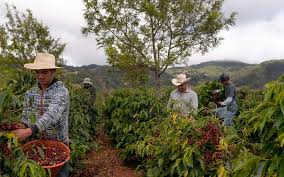
Nuevo Oriente (New East) is located near the border with Honduras and El Salvador. It developed into a coffee-dependent production zone from a once-poor area in the 1950s and is known for its mineral-rich, metamorphic soil.
1. Geography & Terroir
Location: Situated in eastern Guatemala, the region is mountainous and was once part of an ancient volcanic range.
Altitude: Farms are located at elevations between 1,300 and 1,700 meters (approx. 4,300–5,600 feet), allowing for the cultivation of Strictly Hard Bean (SHB) grade coffee.
Soil Type: The volcanoes are now dormant, and the soil has transformed into unique, mineral-rich metamorphic rock and clay, which is different from the active volcanic soils found in other regions like Antigua.
Climate: The region is rainy and cloudy, with average temperatures of 18–25°C (64–77°F) and relative humidity between 70–80%. This moderate rainfall and humidity create ideal growing conditions.
2. Production & Scale
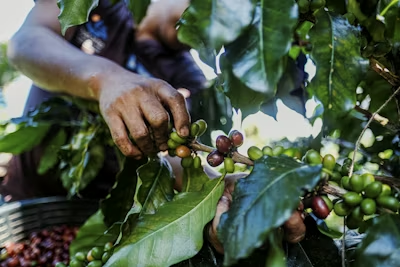
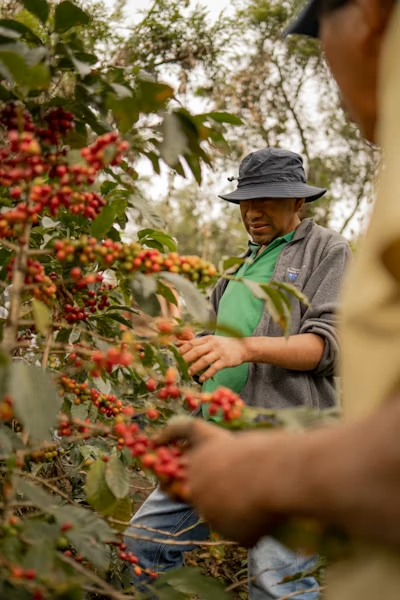
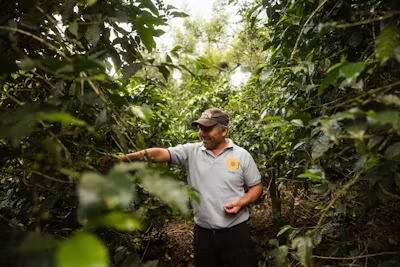
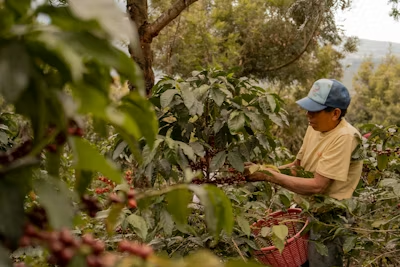
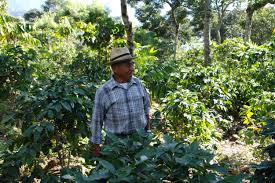
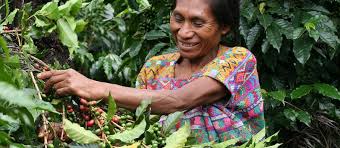
Smallholder Focus: Coffee is primarily grown on small family farms, many of which also cultivate corn, fruits, and vegetables for their own consumption. The region has over 1,539 families cultivating more than 3,077 hectares.
Economic Driver: Coffee has become the key driver of economic growth for this once-isolated area, transforming virtually every farm on the mountains into a coffee-producing unit.
Processing Infrastructure: While some farms have small on-site pulpers, most producers in the region rely on selling their cherries or parchment to centralized wet mills due to the high volume of production and logistical needs.
Regional Rank: Nuevo Oriente is the 8th largest coffee-growing region in Guatemala.

3. Varietal Profile
Producers focus on traditional Arabica varieties:
Bourbon: A primary varietal contributing to the region's classic sweetness and body.
Caturra & Catuai: These varieties are popular for their balance of productivity and flavor profile.
Pache: A local mutation of the Typica variety is also commonly planted.
Shade Grown: Most coffee in this region is shade-grown, which helps with slow growth and enhances flavor complexity.
4. Flavor & Processing
Primary Process: The Fully Washed method is standard, utilizing clean water and leading to a clean, balanced cup. Sun drying on patios is a common practice when weather permits.
Emerging Processes (2025): There is a growing trend of utilizing Natural and Honey processes to create unique, fruity profiles like strawberry and watermelon to meet specialty market demands.
Flavor Profile:
Acidity: Well-balanced and bright, often with citrus notes (lemon/orange zest).
Body: Full-bodied with a deep, velvety, and smooth mouthfeel.
Notes: Renowned for prominent chocolate and cocoa characteristics, complemented by hints of berries, nuts (almond), and caramel.
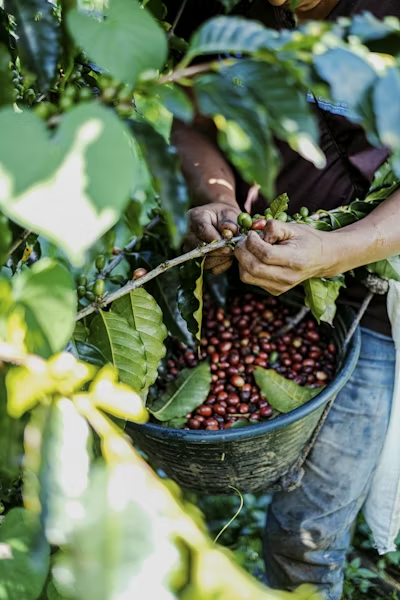
Harvest Window: The harvest season typically runs from December through March.
.png)





No Comments Found!