Shopping cart
Your cart empty!
Your cart empty!
Terms of use dolor sit amet consectetur, adipisicing elit. Recusandae provident ullam aperiam quo ad non corrupti sit vel quam repellat ipsa quod sed, repellendus adipisci, ducimus ea modi odio assumenda.
Lorem ipsum dolor sit amet consectetur adipisicing elit. Sequi, cum esse possimus officiis amet ea voluptatibus libero! Dolorum assumenda esse, deserunt ipsum ad iusto! Praesentium error nobis tenetur at, quis nostrum facere excepturi architecto totam.
Lorem ipsum dolor sit amet consectetur adipisicing elit. Inventore, soluta alias eaque modi ipsum sint iusto fugiat vero velit rerum.
Sequi, cum esse possimus officiis amet ea voluptatibus libero! Dolorum assumenda esse, deserunt ipsum ad iusto! Praesentium error nobis tenetur at, quis nostrum facere excepturi architecto totam.
Lorem ipsum dolor sit amet consectetur adipisicing elit. Inventore, soluta alias eaque modi ipsum sint iusto fugiat vero velit rerum.
Dolor sit amet consectetur adipisicing elit. Sequi, cum esse possimus officiis amet ea voluptatibus libero! Dolorum assumenda esse, deserunt ipsum ad iusto! Praesentium error nobis tenetur at, quis nostrum facere excepturi architecto totam.
Lorem ipsum dolor sit amet consectetur adipisicing elit. Inventore, soluta alias eaque modi ipsum sint iusto fugiat vero velit rerum.
Sit amet consectetur adipisicing elit. Sequi, cum esse possimus officiis amet ea voluptatibus libero! Dolorum assumenda esse, deserunt ipsum ad iusto! Praesentium error nobis tenetur at, quis nostrum facere excepturi architecto totam.
Lorem ipsum dolor sit amet consectetur adipisicing elit. Inventore, soluta alias eaque modi ipsum sint iusto fugiat vero velit rerum.
Do you agree to our terms? Sign up
Acatenango Valley
Acatenango Valley is Guatemala's newest officially recognized coffee region (named the 8th region in 2006). It is defined by its extreme altitudes and the influence of the nearby active Fuego volcano.
1. Geography & Terroir
Volcanic Influence: Situated in a high valley flanked by Volcán Acatenango and the active Volcán Fuego. The soil is composed of deep volcanic sand and minerals; Fuego’s frequent eruptions constantly replenish the soil with fresh ash.
Altitude: This is one of the highest growing regions, with farms reaching up to 2,000 meters (approx. 6,560 feet).
Climate: The valley benefits from temperate weather and cool breezes from the Pacific Ocean. Unlike the misty Cobán, Acatenango has distinct seasons that allow for predictable sun-drying.
Soil Quality: The high mineral content and excellent drainage of the volcanic soil allow for deep root systems, which is critical for the nutrient density of the beans.

2. Production & Scale
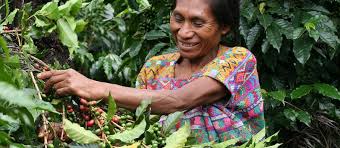
Family-Owned Estates: The region is characterized by a mix of historic family estates and small-scale cooperatives. Many farms have been managed by the same families for over a century.
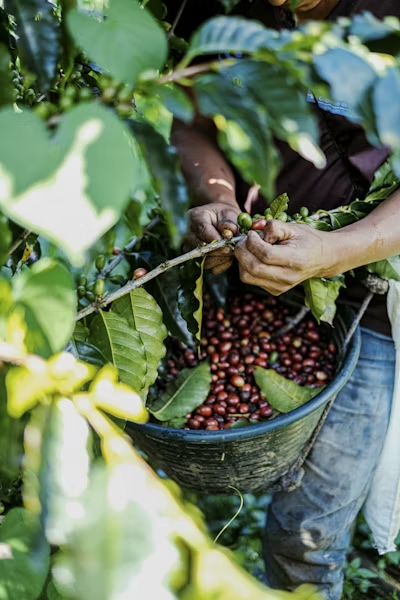
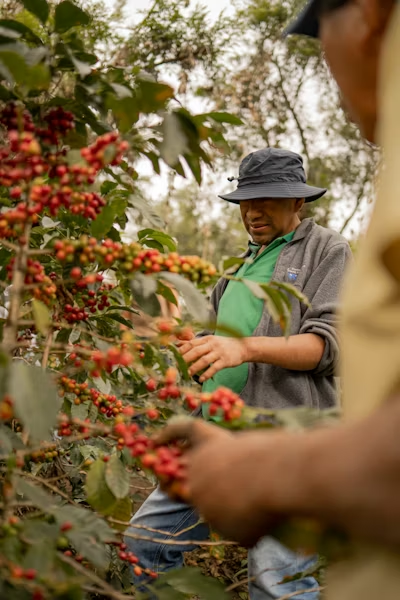
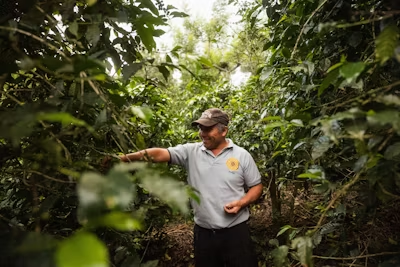
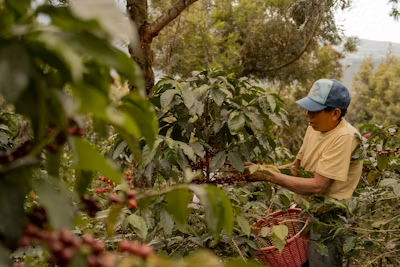
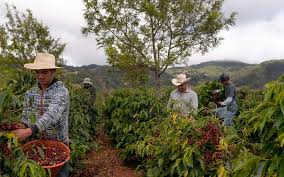
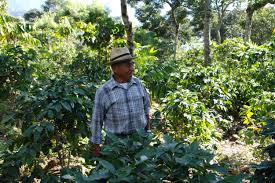
Sustainable Shading: A defining feature of Acatenango production is the dense forest cover. Coffee is grown under thick natural shade, which protects the biodiversity of the valley and allows cherries to ripen very slowly.
2025 Market Position: Acatenango has become a powerhouse in specialty coffee competitions. As of 2025, it is frequently cited for producing high-scoring lots in the Guatemala Cup of Excellence due to its clean, high-altitude profile.
3. Varietal Profile
Producers here prioritize traditional, high-quality Arabica varieties:
Bourbon: The most common variety, thriving in the valley’s rich soil and producing high sweetness.
Caturra & Catuai: These are favored for their resilience at the valley's lower and mid-elevations.
Pacamara & Geisha: In 2025, Acatenango has seen a surge in "Exotic" plantings, with many high-elevation farms specifically cultivating these varieties to target the ultra-premium specialty market.
4. Flavor & Processing
Primary Process: The Washed Process is the tradition here. Because the region has low humidity and ample sunshine during the harvest, beans are almost exclusively sun-dried on patios.
Flavor Profile:
Acidity: Exceptionally bright and clean, often described as having a "sparkling" or "effervescent" quality.
Body: Medium to full, with a very balanced and structured mouthfeel.
Notes: Characterized by a marked fragrance and complex flavor layers. You will often find notes of stone fruit (peach, plum), orange zest, and a sweet chocolate finish.
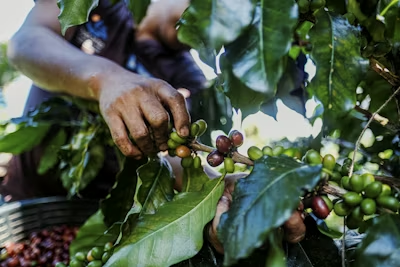
Harvest Window: Due to the high altitude and forest shade, the harvest is late and extended, typically running from January through April.
.png)





No Comments Found!