Shopping cart
Your cart empty!
Your cart empty!
Terms of use dolor sit amet consectetur, adipisicing elit. Recusandae provident ullam aperiam quo ad non corrupti sit vel quam repellat ipsa quod sed, repellendus adipisci, ducimus ea modi odio assumenda.
Lorem ipsum dolor sit amet consectetur adipisicing elit. Sequi, cum esse possimus officiis amet ea voluptatibus libero! Dolorum assumenda esse, deserunt ipsum ad iusto! Praesentium error nobis tenetur at, quis nostrum facere excepturi architecto totam.
Lorem ipsum dolor sit amet consectetur adipisicing elit. Inventore, soluta alias eaque modi ipsum sint iusto fugiat vero velit rerum.
Sequi, cum esse possimus officiis amet ea voluptatibus libero! Dolorum assumenda esse, deserunt ipsum ad iusto! Praesentium error nobis tenetur at, quis nostrum facere excepturi architecto totam.
Lorem ipsum dolor sit amet consectetur adipisicing elit. Inventore, soluta alias eaque modi ipsum sint iusto fugiat vero velit rerum.
Dolor sit amet consectetur adipisicing elit. Sequi, cum esse possimus officiis amet ea voluptatibus libero! Dolorum assumenda esse, deserunt ipsum ad iusto! Praesentium error nobis tenetur at, quis nostrum facere excepturi architecto totam.
Lorem ipsum dolor sit amet consectetur adipisicing elit. Inventore, soluta alias eaque modi ipsum sint iusto fugiat vero velit rerum.
Sit amet consectetur adipisicing elit. Sequi, cum esse possimus officiis amet ea voluptatibus libero! Dolorum assumenda esse, deserunt ipsum ad iusto! Praesentium error nobis tenetur at, quis nostrum facere excepturi architecto totam.
Lorem ipsum dolor sit amet consectetur adipisicing elit. Inventore, soluta alias eaque modi ipsum sint iusto fugiat vero velit rerum.
Do you agree to our terms? Sign up
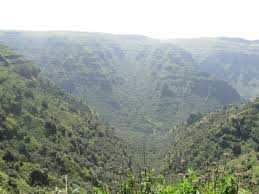
Lake Kossou, located in central Côte d’Ivoire, is one of the country’s most important inland water bodies and a defining feature of the Bandama River basin. Created in the early 1970s by the construction of the Kossou hydroelectric dam near Yamoussoukro, the lake covers a vast area that fluctuates seasonally with rainfall and water management needs. Beyond its role in electricity generation, Lake Kossou has had a profound influence on the region’s agriculture, settlement patterns, fisheries, and rural livelihoods.
The climate around Lake Kossou is tropical sub-humid, with a distinct rainy season and annual rainfall generally ranging between 1,100- and 1,400-mm. Temperatures remain warm throughout the year, and elevations are moderate, mostly between 200 and 300 meters above sea level. These conditions support a range of crops, particularly cocoa, coffee (mainly Robusta), cotton, yam, maize, cassava, and rice. Compared with the humid forest zones of the south-west, however, coffee production around Lake Kossou is limited and secondary, as the area lies closer to the forest–savanna transition zone where cocoa and food crops are more dominant.
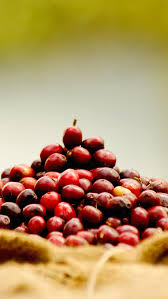
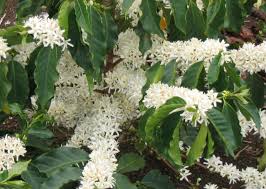
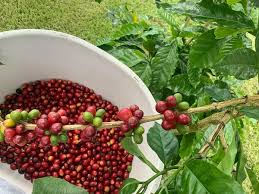
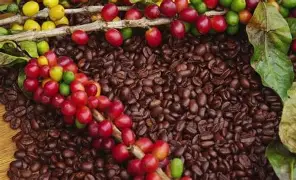
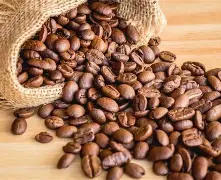
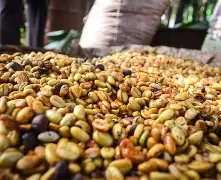
Where coffee is grown, it is typically Robusta coffee, cultivated by smallholder farmers on mixed farms. Coffee plots are usually small and often intercropped with food crops or shade trees. Production systems are largely traditional and low input, relying on rainfall rather than irrigation and using minimal fertilizers or improved planting material. As in many parts of Côte d’Ivoire, aging coffee trees, modest yields, and fluctuating market prices have reduced the attractiveness of coffee, leading many farmers to prioritize cocoa or staple crops instead. Coffee harvesting follows the national pattern, generally taking place from November to March, with simple dry processing methods used at farm level.
Lake Kossou is especially significant for its fisheries, which have become a major economic activity for communities displaced by the dam and for newer settlements along the lakeshore. Fishing provides both income and protein for local populations and has, in many cases, become more important than coffee as a livelihood source. Seasonal changes in water levels influence fishing intensity and agricultural activities along the lake’s margins, where recession agriculture—growing crops as water levels fall—is practiced in some areas.
The creation of the lake also brought social and environmental changes. Large areas of forest and farmland were submerged, forcing population relocation and altering traditional farming systems. Over time, pressure on land around the lake has increased, leading to soil degradation, deforestation, and competition between farming and fishing activities. These dynamics further limit the expansion of perennial crops like coffee, which require long-term investment and stable land tenure.
In summary, Lake Kossou is a strategic resource for Côte d’Ivoire, central to energy production, fisheries, and regional food security. While coffee is present in the surrounding areas as part of diversified smallholder systems, it plays a minor role compared to cocoa, food crops, and fishing. The Lake Kossou zone illustrates the broader transition in central Côte d’Ivoire, where agriculture is shaped as much by infrastructure and environmental change as by traditional crop production.


.png)





No Comments Found!