Shopping cart
Your cart empty!
Your cart empty!
Terms of use dolor sit amet consectetur, adipisicing elit. Recusandae provident ullam aperiam quo ad non corrupti sit vel quam repellat ipsa quod sed, repellendus adipisci, ducimus ea modi odio assumenda.
Lorem ipsum dolor sit amet consectetur adipisicing elit. Sequi, cum esse possimus officiis amet ea voluptatibus libero! Dolorum assumenda esse, deserunt ipsum ad iusto! Praesentium error nobis tenetur at, quis nostrum facere excepturi architecto totam.
Lorem ipsum dolor sit amet consectetur adipisicing elit. Inventore, soluta alias eaque modi ipsum sint iusto fugiat vero velit rerum.
Sequi, cum esse possimus officiis amet ea voluptatibus libero! Dolorum assumenda esse, deserunt ipsum ad iusto! Praesentium error nobis tenetur at, quis nostrum facere excepturi architecto totam.
Lorem ipsum dolor sit amet consectetur adipisicing elit. Inventore, soluta alias eaque modi ipsum sint iusto fugiat vero velit rerum.
Dolor sit amet consectetur adipisicing elit. Sequi, cum esse possimus officiis amet ea voluptatibus libero! Dolorum assumenda esse, deserunt ipsum ad iusto! Praesentium error nobis tenetur at, quis nostrum facere excepturi architecto totam.
Lorem ipsum dolor sit amet consectetur adipisicing elit. Inventore, soluta alias eaque modi ipsum sint iusto fugiat vero velit rerum.
Sit amet consectetur adipisicing elit. Sequi, cum esse possimus officiis amet ea voluptatibus libero! Dolorum assumenda esse, deserunt ipsum ad iusto! Praesentium error nobis tenetur at, quis nostrum facere excepturi architecto totam.
Lorem ipsum dolor sit amet consectetur adipisicing elit. Inventore, soluta alias eaque modi ipsum sint iusto fugiat vero velit rerum.
Do you agree to our terms? Sign up
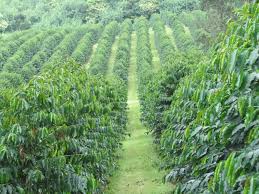
West Nile, located in northwestern Uganda along the borders with the Democratic Republic of Congo and South Sudan, encompasses districts such as Arua, Nebbi, Zombo, Yumbe, and Moyo. The region is part of Uganda’s traditional Robusta coffee-growing belt, with lower elevations ranging from 700 to 1,200 meters above sea level, a hot tropical climate, and annual rainfall between 1,200 and 1,600 mm. These conditions favor the cultivation of Robusta coffee, which thrives in warm, humid environments and forms a significant part of Uganda’s coffee export profile.
Coffee farming in West Nile is predominantly smallholder-based, with plots often under one hectare. Farmers commonly practice mixed cropping systems, growing coffee alongside cassava, maize, beans, and bananas. Shade is often provided by intercropped trees or other crops, which helps maintain soil fertility and moisture. Farming practices are largely traditional and rain-fed, though cooperatives and government extension programs are increasingly promoting the use of improved seedlings, pruning, mulching, and pest control to boost productivity.
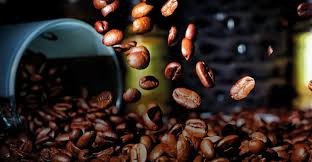
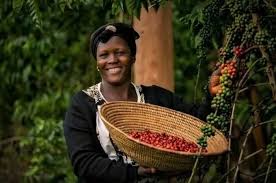
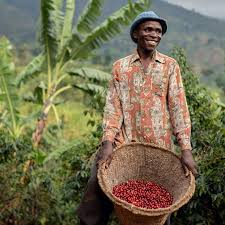
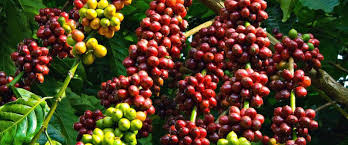
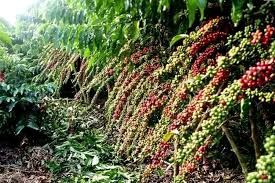
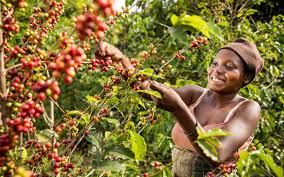
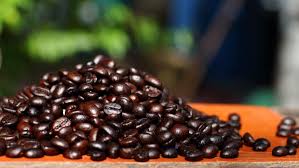
The main harvest season in West Nile occurs from November to February, with occasional smaller pickings later in the year depending on rainfall patterns. Coffee cherries are harvested by hand, and processing is primarily through dry (natural) methods, where cherries are sun-dried before hulling. Collected coffee is sold to local cooperatives or traders, who then supply regional processing centers or export markets.
Challenges in the West Nile coffee sector include low farm inputs, aging coffee trees, pests and diseases (such as coffee wilt disease), irregular rainfall, and limited access to markets, which can all reduce productivity. Despite these limitations, coffee remains a key source of income and employment for smallholder farmers, forming an essential part of the local economy. West Nile Robusta is appreciated for its strong body, bitterness, and suitability for blending or instant coffee, making the region an important contributor to Uganda’s overall coffee production and export capacity.

.png)





No Comments Found!