Shopping cart
Your cart empty!
Your cart empty!
Terms of use dolor sit amet consectetur, adipisicing elit. Recusandae provident ullam aperiam quo ad non corrupti sit vel quam repellat ipsa quod sed, repellendus adipisci, ducimus ea modi odio assumenda.
Lorem ipsum dolor sit amet consectetur adipisicing elit. Sequi, cum esse possimus officiis amet ea voluptatibus libero! Dolorum assumenda esse, deserunt ipsum ad iusto! Praesentium error nobis tenetur at, quis nostrum facere excepturi architecto totam.
Lorem ipsum dolor sit amet consectetur adipisicing elit. Inventore, soluta alias eaque modi ipsum sint iusto fugiat vero velit rerum.
Sequi, cum esse possimus officiis amet ea voluptatibus libero! Dolorum assumenda esse, deserunt ipsum ad iusto! Praesentium error nobis tenetur at, quis nostrum facere excepturi architecto totam.
Lorem ipsum dolor sit amet consectetur adipisicing elit. Inventore, soluta alias eaque modi ipsum sint iusto fugiat vero velit rerum.
Dolor sit amet consectetur adipisicing elit. Sequi, cum esse possimus officiis amet ea voluptatibus libero! Dolorum assumenda esse, deserunt ipsum ad iusto! Praesentium error nobis tenetur at, quis nostrum facere excepturi architecto totam.
Lorem ipsum dolor sit amet consectetur adipisicing elit. Inventore, soluta alias eaque modi ipsum sint iusto fugiat vero velit rerum.
Sit amet consectetur adipisicing elit. Sequi, cum esse possimus officiis amet ea voluptatibus libero! Dolorum assumenda esse, deserunt ipsum ad iusto! Praesentium error nobis tenetur at, quis nostrum facere excepturi architecto totam.
Lorem ipsum dolor sit amet consectetur adipisicing elit. Inventore, soluta alias eaque modi ipsum sint iusto fugiat vero velit rerum.
Do you agree to our terms? Sign up
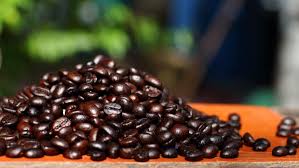
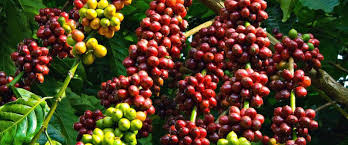
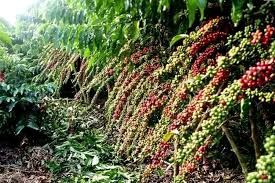
Busoga, a region in eastern Uganda located along the northern shores of Lake Victoria, is one of the country’s principal Robusta coffee-producing areas. The region encompasses districts such as Jinja, Kamuli, Iganga, and Bugiri, and benefits from a warm, humid tropical climate with annual rainfall ranging between 1,100 and 1,500 mm, often distributed in a bimodal pattern. These climatic conditions, combined with fertile soils, create an ideal environment for Robusta coffee, which thrives in low-lying, moist regions and can tolerate the higher temperatures common in Busoga.
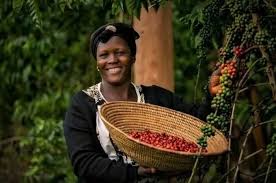
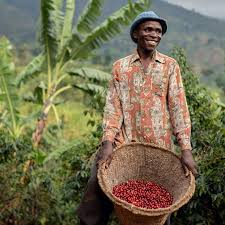
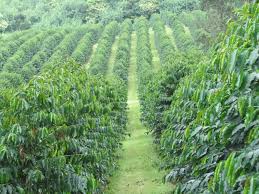
Coffee cultivation in Busoga is dominated by smallholder farmers, who typically manage plots of less than one hectare. Most farms practice mixed cropping systems, interspersing coffee with bananas, cassava, maize, and beans. Such intercropping provides food security for households while allowing coffee to serve as a critical cash crop. Many coffee trees are grown under shade, either from banana plants or indigenous trees, which helps maintain soil moisture, reduces heat stress on the coffee plants, and contributes to sustainable agroforestry practices.
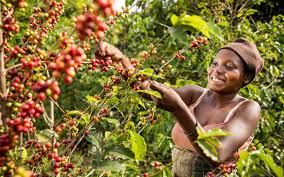
The region experiences two coffee harvests annually due to its bimodal rainfall. The main crop is harvested between October and December, while a smaller secondary crop is gathered between May and July. Harvesting is done by hand to ensure selective picking of ripe cherries, which are then processed using a combination of wet (washed) and sun-dried methods, depending on the proximity to wet mills or traditional drying facilities. Local cooperatives and Uganda Coffee Development Authority (UCDA) agents play a crucial role in collecting, grading, and marketing the coffee, linking smallholder production to national and international markets.
Despite its favorable environment and long-standing coffee culture, Busoga faces several challenges. Many coffee trees are aging and in need of rejuvenation, while pests and diseases, such as coffee wilt disease and coffee berry disease, continue to affect yields. Fluctuating global coffee prices, competition from other cash crops, and limited access to modern agronomic inputs also pose constraints on production. Nevertheless, Busoga remains a strategic hub of Uganda’s coffee sector, contributing significantly to the country’s reputation as one of the world’s largest Robusta exporters. Coffee from Busoga is valued for its strong body, characteristic bitterness, and suitability for instant coffee and espresso blends, making it both an economic mainstay for smallholder farmers and a key component of Uganda’s export portfolio.

.png)





No Comments Found!