Shopping cart
Your cart empty!
Your cart empty!
Terms of use dolor sit amet consectetur, adipisicing elit. Recusandae provident ullam aperiam quo ad non corrupti sit vel quam repellat ipsa quod sed, repellendus adipisci, ducimus ea modi odio assumenda.
Lorem ipsum dolor sit amet consectetur adipisicing elit. Sequi, cum esse possimus officiis amet ea voluptatibus libero! Dolorum assumenda esse, deserunt ipsum ad iusto! Praesentium error nobis tenetur at, quis nostrum facere excepturi architecto totam.
Lorem ipsum dolor sit amet consectetur adipisicing elit. Inventore, soluta alias eaque modi ipsum sint iusto fugiat vero velit rerum.
Sequi, cum esse possimus officiis amet ea voluptatibus libero! Dolorum assumenda esse, deserunt ipsum ad iusto! Praesentium error nobis tenetur at, quis nostrum facere excepturi architecto totam.
Lorem ipsum dolor sit amet consectetur adipisicing elit. Inventore, soluta alias eaque modi ipsum sint iusto fugiat vero velit rerum.
Dolor sit amet consectetur adipisicing elit. Sequi, cum esse possimus officiis amet ea voluptatibus libero! Dolorum assumenda esse, deserunt ipsum ad iusto! Praesentium error nobis tenetur at, quis nostrum facere excepturi architecto totam.
Lorem ipsum dolor sit amet consectetur adipisicing elit. Inventore, soluta alias eaque modi ipsum sint iusto fugiat vero velit rerum.
Sit amet consectetur adipisicing elit. Sequi, cum esse possimus officiis amet ea voluptatibus libero! Dolorum assumenda esse, deserunt ipsum ad iusto! Praesentium error nobis tenetur at, quis nostrum facere excepturi architecto totam.
Lorem ipsum dolor sit amet consectetur adipisicing elit. Inventore, soluta alias eaque modi ipsum sint iusto fugiat vero velit rerum.
Do you agree to our terms? Sign up
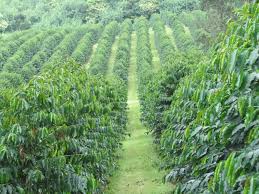
Ankole, located in southwestern Uganda, encompasses districts such as Mbarara, Bushenyi, Ntungamo, Ibanda, and Isingiro, and forms part of Uganda’s key coffee-producing belt, particularly for Robusta coffee, although small amounts of Arabica are also grown at higher elevations. The region is characterized by rolling hills, fertile volcanic soils, and elevations ranging from 1,000 to 1,500 meters above sea level, creating a favorable environment for coffee cultivation. The climate is tropical with moderate rainfall, averaging 1,200–1,500 mm annually, often with two rainy seasons, which supports two coffee harvests per year in some areas.
Coffee farming in Ankole is predominantly smallholder-based, with farms often less than two hectares. Most farmers practice mixed cropping systems, intercropping coffee with bananas, maize, beans, cassava, and sometimes tea or pastures for livestock. This diversified system provides both food security and supplementary income, while also offering some protection to coffee plants through partial shade and soil stabilization. Coffee trees are generally rain-fed, with limited use of fertilizers and agrochemicals, though farmers increasingly adopt improved seedlings and agronomic practices promoted by cooperatives and government extension services.
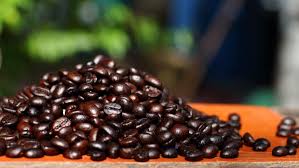
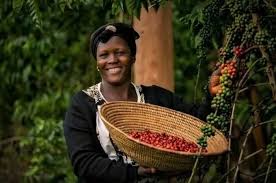
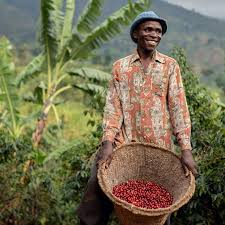
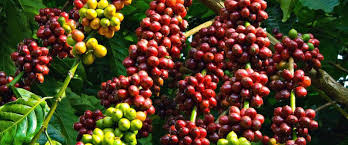
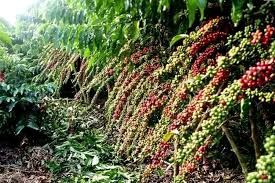
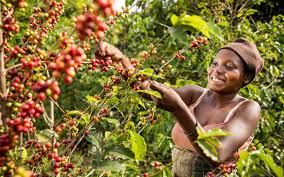
Harvesting in Ankole typically occurs between October and December for the main crop and May to July for the secondary crop. Coffee cherries are collected manually, ensuring that only ripe cherries are picked. Processing methods include wet (washed) processing in centralized mills and sun-drying in smaller farm-level operations. After processing, coffee is sold to local cooperatives or directly to traders, who transport it to regional or national markets for export.
Ankole’s coffee sector faces several challenges, including aging coffee trees, pests and diseases (notably coffee wilt disease), price volatility, and competition from other cash crops such as tea and bananas. Despite these constraints, coffee remains an important source of income for smallholder farmers and a crucial part of the region’s agricultural economy. Ankole Robusta is recognized for its strong body, earthy flavor, and suitability for instant coffee and espresso blends, contributing to Uganda’s status as a leading global Robusta exporter. With continued investment in rejuvenation of old coffee plots, improved farming practices, and cooperative support, Ankole has the potential to maintain and even expand its contribution to both local livelihoods and national coffee production.

.png)






No Comments Found!