Shopping cart
Your cart empty!
Your cart empty!
Terms of use dolor sit amet consectetur, adipisicing elit. Recusandae provident ullam aperiam quo ad non corrupti sit vel quam repellat ipsa quod sed, repellendus adipisci, ducimus ea modi odio assumenda.
Lorem ipsum dolor sit amet consectetur adipisicing elit. Sequi, cum esse possimus officiis amet ea voluptatibus libero! Dolorum assumenda esse, deserunt ipsum ad iusto! Praesentium error nobis tenetur at, quis nostrum facere excepturi architecto totam.
Lorem ipsum dolor sit amet consectetur adipisicing elit. Inventore, soluta alias eaque modi ipsum sint iusto fugiat vero velit rerum.
Sequi, cum esse possimus officiis amet ea voluptatibus libero! Dolorum assumenda esse, deserunt ipsum ad iusto! Praesentium error nobis tenetur at, quis nostrum facere excepturi architecto totam.
Lorem ipsum dolor sit amet consectetur adipisicing elit. Inventore, soluta alias eaque modi ipsum sint iusto fugiat vero velit rerum.
Dolor sit amet consectetur adipisicing elit. Sequi, cum esse possimus officiis amet ea voluptatibus libero! Dolorum assumenda esse, deserunt ipsum ad iusto! Praesentium error nobis tenetur at, quis nostrum facere excepturi architecto totam.
Lorem ipsum dolor sit amet consectetur adipisicing elit. Inventore, soluta alias eaque modi ipsum sint iusto fugiat vero velit rerum.
Sit amet consectetur adipisicing elit. Sequi, cum esse possimus officiis amet ea voluptatibus libero! Dolorum assumenda esse, deserunt ipsum ad iusto! Praesentium error nobis tenetur at, quis nostrum facere excepturi architecto totam.
Lorem ipsum dolor sit amet consectetur adipisicing elit. Inventore, soluta alias eaque modi ipsum sint iusto fugiat vero velit rerum.
Do you agree to our terms? Sign up
Viqueque: Unlocking the Lost World of Timor-Leste Coffee
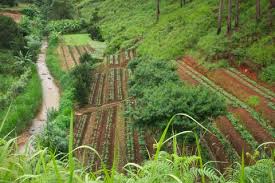
In the southeastern reaches of Timor-Leste, where the coastal plains give way to a labyrinth of knife-edge ridges and forgotten plateaus, lies a coffee region unlike any other in the country. This is Viqueque—a name whispered with reverence among specialty coffee importers and a place that is actively rewriting the narrative of what Timorese coffee can be. It is not a region of vast, organized plantations, but a living museum and a laboratory of flavor, where coffee grows in a state of near-wild abundance.
Viqueque’s defining characteristic is its profound remoteness. Its most famous coffee-growing area bears a fitting name: Mundo Perdido, the "Lost World." This high-altitude plateau and the surrounding cloud-forested mountains have acted as a natural vault, preserving coffee genetics and farming traditions untouched by the commercial pressures that shaped other regions.
Here, coffee is not so much cultivated as curated. Smallholder farmers, often from isolated mountain communities, tend trees that are frequently over 50 years old. These trees grow in dense, biodiverse shade forests, their roots intertwined with native flora. The farming is entirely traditional and organic by default—a necessity, as chemical inputs are neither available nor affordable. This pristine, closed-loop ecosystem is the foundation of Viqueque's unique cup profile.
While most of Timor-Leste relies on the sturdy Hibrido de Timor (HDT) hybrid, Viqueque is a sanctuary for forgotten heirloom varieties. Decades, if not a century, of isolation have allowed old Arabica Typica and other unknown, locally adapted varieties to survive and propagate. These heirloom trees, with their longer, more elegant beans, are the source of Viqueque’s sensory magic. They offer a direct, living link to the coffee seeds first introduced to the island generations ago, providing a taste profile that is a dramatic departure from the HDT norm.
To taste a well-processed coffee from Viqueque’s highlands is to experience a revelation. It shatters the expectation of a typical "Timor" cup—the heavy body and dominant earthy, chocolate notes.
Instead, the profile is one of elegance and aromatic complexity:
Acidity: A bright, vibrant acidity—often citric (lemon, lime) or malic (green apple)—cuts through, providing a structure unseen in coffees from Ermera or Bobonaro.
Aroma & Flavor: The cup unfolds with pronounced floral notes (jasmine, honeysuckle) and delicate stone fruit (peach, apricot, nectarine). There can be a tea-like clarity (black tea, oolong) and a honeyed sweetness.
Body & Finish: The body is lighter, more silky, and the finish is remarkably clean, devoid of the heavy earthiness common elsewhere.
This profile is a direct expression of its high-altitude maturation, heirloom genetics, and pristine forest environment.
Viqueque’s incredible potential is matched only by the immense challenges of unlocking it. Infrastructure is minimal; reaching many farms requires arduous journeys on foot or motorcycle. There is no large cooperative presence like the CCT; production is hyper-local and fragmented. For years, this coffee was consumed locally or sold for subsistence, its quality unrecognized by the formal market.
Change is being driven by a handful of dedicated NGOs, social enterprises, and visionary exporters who work directly with community leaders. They focus on:
Selective harvesting training to pick only ripe cherries.
Introducing careful washed processing at small, community-level stations to highlight the inherent clarity of the beans.
Creating traceable micro-lots that tell the story of a specific hamlet or mountain slope.
Every bag of specialty Viqueque coffee is a hard-won triumph over geography.
Viqueque represents the future of differentiation for Timor-Leste. As the global market increasingly values uniqueness and traceability, this region offers a story and a flavor profile that can stand alongside the finest coffees of Central America or East Africa. It proves that Timor-Leste is not a monolith of earthy, chocolatey coffees, but a archipelago of diverse micro-terroirs waiting to be discovered.
To drink Viqueque coffee is to taste isolation, history, and hope. It is the taste of a "Lost World" found, offering a rare and exquisite glimpse into the past and a compelling vision for the future of Timorese coffee
" style="height: 100px" onchange="formValidation()" required>
In the southeastern reaches of Timor-Leste, where the coastal plains give way to a labyrinth of knife-edge ridges and forgotten plateaus, lies a coffee region unlike any other in the country. This is Viqueque—a name whispered with reverence among specialty coffee importers and a place that is actively rewriting the narrative of what Timorese coffee can be. It is not a region of vast, organized plantations, but a living museum and a laboratory of flavor, where coffee grows in a state of near-wild abundance.
Viqueque’s defining characteristic is its profound remoteness. Its most famous coffee-growing area bears a fitting name: Mundo Perdido, the "Lost World." This high-altitude plateau and the surrounding cloud-forested mountains have acted as a natural vault, preserving coffee genetics and farming traditions untouched by the commercial pressures that shaped other regions.
Here, coffee is not so much cultivated as curated. Smallholder farmers, often from isolated mountain communities, tend trees that are frequently over 50 years old. These trees grow in dense, biodiverse shade forests, their roots intertwined with native flora. The farming is entirely traditional and organic by default—a necessity, as chemical inputs are neither available nor affordable. This pristine, closed-loop ecosystem is the foundation of Viqueque's unique cup profile.
While most of Timor-Leste relies on the sturdy Hibrido de Timor (HDT) hybrid, Viqueque is a sanctuary for forgotten heirloom varieties. Decades, if not a century, of isolation have allowed old Arabica Typica and other unknown, locally adapted varieties to survive and propagate. These heirloom trees, with their longer, more elegant beans, are the source of Viqueque’s sensory magic. They offer a direct, living link to the coffee seeds first introduced to the island generations ago, providing a taste profile that is a dramatic departure from the HDT norm.
To taste a well-processed coffee from Viqueque’s highlands is to experience a revelation. It shatters the expectation of a typical "Timor" cup—the heavy body and dominant earthy, chocolate notes.
Instead, the profile is one of elegance and aromatic complexity:
Acidity: A bright, vibrant acidity—often citric (lemon, lime) or malic (green apple)—cuts through, providing a structure unseen in coffees from Ermera or Bobonaro.
Aroma & Flavor: The cup unfolds with pronounced floral notes (jasmine, honeysuckle) and delicate stone fruit (peach, apricot, nectarine). There can be a tea-like clarity (black tea, oolong) and a honeyed sweetness.
Body & Finish: The body is lighter, more silky, and the finish is remarkably clean, devoid of the heavy earthiness common elsewhere.
This profile is a direct expression of its high-altitude maturation, heirloom genetics, and pristine forest environment.
Viqueque’s incredible potential is matched only by the immense challenges of unlocking it. Infrastructure is minimal; reaching many farms requires arduous journeys on foot or motorcycle. There is no large cooperative presence like the CCT; production is hyper-local and fragmented. For years, this coffee was consumed locally or sold for subsistence, its quality unrecognized by the formal market.
Change is being driven by a handful of dedicated NGOs, social enterprises, and visionary exporters who work directly with community leaders. They focus on:
Selective harvesting training to pick only ripe cherries.
Introducing careful washed processing at small, community-level stations to highlight the inherent clarity of the beans.
Creating traceable micro-lots that tell the story of a specific hamlet or mountain slope.
Every bag of specialty Viqueque coffee is a hard-won triumph over geography.
Viqueque represents the future of differentiation for Timor-Leste. As the global market increasingly values uniqueness and traceability, this region offers a story and a flavor profile that can stand alongside the finest coffees of Central America or East Africa. It proves that Timor-Leste is not a monolith of earthy, chocolatey coffees, but a archipelago of diverse micro-terroirs waiting to be discovered.
To drink Viqueque coffee is to taste isolation, history, and hope. It is the taste of a "Lost World" found, offering a rare and exquisite glimpse into the past and a compelling vision for the future of Timorese coffee
.png)





No Comments Found!