Shopping cart
Your cart empty!
Your cart empty!
Terms of use dolor sit amet consectetur, adipisicing elit. Recusandae provident ullam aperiam quo ad non corrupti sit vel quam repellat ipsa quod sed, repellendus adipisci, ducimus ea modi odio assumenda.
Lorem ipsum dolor sit amet consectetur adipisicing elit. Sequi, cum esse possimus officiis amet ea voluptatibus libero! Dolorum assumenda esse, deserunt ipsum ad iusto! Praesentium error nobis tenetur at, quis nostrum facere excepturi architecto totam.
Lorem ipsum dolor sit amet consectetur adipisicing elit. Inventore, soluta alias eaque modi ipsum sint iusto fugiat vero velit rerum.
Sequi, cum esse possimus officiis amet ea voluptatibus libero! Dolorum assumenda esse, deserunt ipsum ad iusto! Praesentium error nobis tenetur at, quis nostrum facere excepturi architecto totam.
Lorem ipsum dolor sit amet consectetur adipisicing elit. Inventore, soluta alias eaque modi ipsum sint iusto fugiat vero velit rerum.
Dolor sit amet consectetur adipisicing elit. Sequi, cum esse possimus officiis amet ea voluptatibus libero! Dolorum assumenda esse, deserunt ipsum ad iusto! Praesentium error nobis tenetur at, quis nostrum facere excepturi architecto totam.
Lorem ipsum dolor sit amet consectetur adipisicing elit. Inventore, soluta alias eaque modi ipsum sint iusto fugiat vero velit rerum.
Sit amet consectetur adipisicing elit. Sequi, cum esse possimus officiis amet ea voluptatibus libero! Dolorum assumenda esse, deserunt ipsum ad iusto! Praesentium error nobis tenetur at, quis nostrum facere excepturi architecto totam.
Lorem ipsum dolor sit amet consectetur adipisicing elit. Inventore, soluta alias eaque modi ipsum sint iusto fugiat vero velit rerum.
Do you agree to our terms? Sign up
While the verdant western highlands of Ermera and Ainaro dominate Timor-Leste’s coffee narrative, the country’s vast eastern districts—Manatuto and Baucau—hold a quieter, more rugged secret. Here, coffee cultivation tells a story not of centralised production, but of scattered resilience. In these sun-drenched landscapes, coffee grows in defiant pockets, producing beans with a wild, untamed character that stands apart from the nation’s better-known profiles.
Unlike the dense coffee forests of the central highlands, cultivation in the east is defined by dispersal and adaptation. The geography transitions from Baucau’s dramatic coastal escarpment—home to Timor-Leste’s second-largest city—to Manatuto’s long, arid coastal plain and its rugged inland hills. Rainfall is less predictable, and the climate is noticeably hotter and drier.
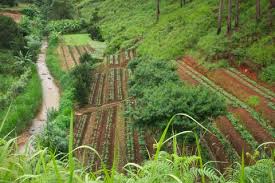
Coffee farming here is truly a smallholder’s endeavour. Trees are often interspersed among other subsistence crops like maize, cassava, and vegetables on steep, remote slopes. This is organic by circumstance, with traditional methods passed down without the organised infrastructure seen in the west. The challenges are pronounced: limited access to processing centres, older tree stocks, and a reliance on natural rainfall make yields inconsistent and quality variable.
The cup profile of eastern coffee is a direct reflection of its environment. If Ermera’s coffee is complex and polished, and Bobonaro’s is earthy and heavy, then Manatuto and Baucau’s offerings are unabashedly rustic and bold.
The dominant flavor notes lean into the savoury and deep:
Earthy & Woody: A profound, grounding earthiness is common, evoking dry forest floor, cedar, and sometimes tobacco leaf.
Heavy Body: The mouthfeel is typically substantial and weighty, coating the palate.
Muted Acidity: Bright, fruity acidity is rare here. Instead, a low, soft, or even savoury acidity allows the deeper base notes to dominate.
Robust Character: Flavours can be intense and less balanced than western counterparts, often showcasing the hardy, slightly wild side of the Timor Hybrid variety.
This is not a coffee for those seeking delicate florals. It is a coffee for those who appreciate a bold, unvarnished expression of place—a cup that tastes of sun-baked hills and resilient tradition.
The very factors that create this unique profile also define the region’s struggles. The lack of centralised wet mills means much of the coffee is processed using traditional dried (natural) methods at the farm level, which can amplify its rustic qualities. For decades, these beans have been anonymously blended into larger, lower-grade exports, their distinct origin lost.
Yet, this obscurity is also where the potential lies. For specialty coffee hunters and socially-conscious exporters, Manatuto and Baucau represent a final frontier of terroir discovery in Timor-Leste. There is growing recognition that with targeted investment in community washing stations, careful harvesting protocols, and dedicated lot separation, these eastern regions could produce extraordinary single-origin coffees prized for their unique, powerful identity.
In the east, coffee is less an economic engine and more a thread in the fabric of rural life. It provides crucial, if intermittent, cash income for families living on the climatic and economic margins. Its continued cultivation is an act of cultural preservation and adaptation.
As the world of specialty coffee continues to seek out narratives of authenticity and distinctiveness, the untamed coffees of Manatuto and Baucau stand ready. They offer a taste of a different Timor-Leste—one that is drier, tougher, and quietly defiant. They are not the country’s polished face, but its weathered, honest hands, holding a cup of deep, resonant history.
.png)




No Comments Found!