Shopping cart
Your cart empty!
Your cart empty!
Terms of use dolor sit amet consectetur, adipisicing elit. Recusandae provident ullam aperiam quo ad non corrupti sit vel quam repellat ipsa quod sed, repellendus adipisci, ducimus ea modi odio assumenda.
Lorem ipsum dolor sit amet consectetur adipisicing elit. Sequi, cum esse possimus officiis amet ea voluptatibus libero! Dolorum assumenda esse, deserunt ipsum ad iusto! Praesentium error nobis tenetur at, quis nostrum facere excepturi architecto totam.
Lorem ipsum dolor sit amet consectetur adipisicing elit. Inventore, soluta alias eaque modi ipsum sint iusto fugiat vero velit rerum.
Sequi, cum esse possimus officiis amet ea voluptatibus libero! Dolorum assumenda esse, deserunt ipsum ad iusto! Praesentium error nobis tenetur at, quis nostrum facere excepturi architecto totam.
Lorem ipsum dolor sit amet consectetur adipisicing elit. Inventore, soluta alias eaque modi ipsum sint iusto fugiat vero velit rerum.
Dolor sit amet consectetur adipisicing elit. Sequi, cum esse possimus officiis amet ea voluptatibus libero! Dolorum assumenda esse, deserunt ipsum ad iusto! Praesentium error nobis tenetur at, quis nostrum facere excepturi architecto totam.
Lorem ipsum dolor sit amet consectetur adipisicing elit. Inventore, soluta alias eaque modi ipsum sint iusto fugiat vero velit rerum.
Sit amet consectetur adipisicing elit. Sequi, cum esse possimus officiis amet ea voluptatibus libero! Dolorum assumenda esse, deserunt ipsum ad iusto! Praesentium error nobis tenetur at, quis nostrum facere excepturi architecto totam.
Lorem ipsum dolor sit amet consectetur adipisicing elit. Inventore, soluta alias eaque modi ipsum sint iusto fugiat vero velit rerum.
Do you agree to our terms? Sign up
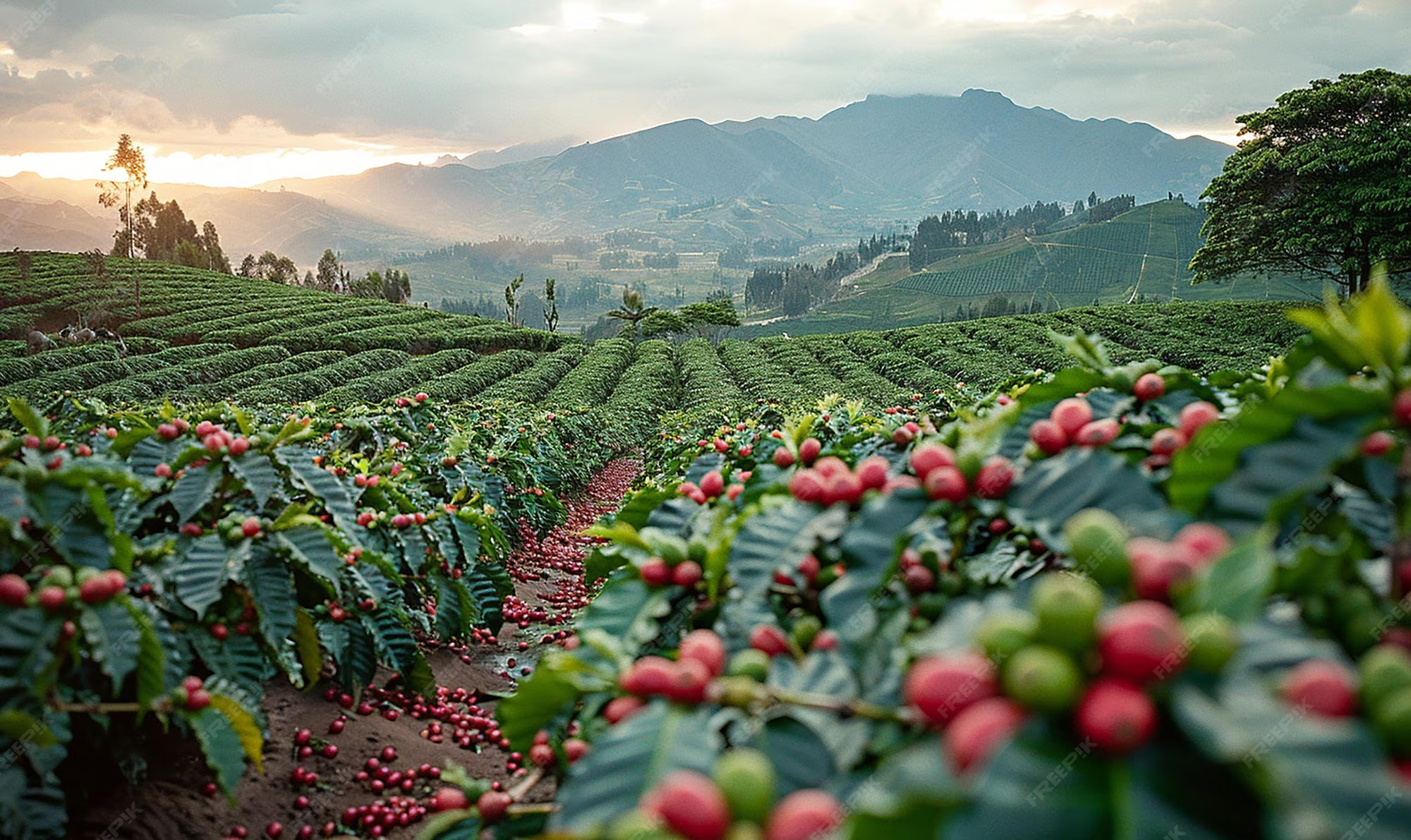
Norte de Santander, located in northeastern Colombia along the Venezuelan border, is one of the country’s most historically significant coffee regions. Coffee was first introduced here from Venezuela in the early 1800s, and by 1808, the first crops were exported back through Venezuela. This makes Norte de Santander the cradle of Colombia’s coffee industry, with Salazar de las Palmas recognized as the site of the nation’s first commercial plantations.
Today, the region is home to around 12,000 small-scale farmers, cultivating Arabica beans across diverse microclimates in the Andean mountains.
Altitude: Coffee is grown at mid-to-high elevations, benefiting from Andean slopes.
Climate: Varied microclimates provide ideal conditions for Arabica cultivation.
Farming Style: Predominantly smallholder farms, often family-run, with strong community traditions.
Heritage: Deep cultural ties to coffee, with generations of growers preserving traditional methods.
Norte de Santander coffee is known for its harmonious balance of flavors, often described as:
Chocolate and caramel sweetness
Bright citrus notes
Medium body with smooth acidity
Clean, pleasant finish
This makes it versatile for both espresso blends and single-origin specialty roasts.
Historic Significance: The birthplace of Colombia’s coffee industry, with over two centuries of cultivation.
Cultural Heritage: Coffee farming is deeply woven into the identity of local communities.
Flavor Diversity: Microclimates create complex profiles, appealing to specialty buyers.
Sustainability: Increasing focus on eco-friendly practices to preserve Andean biodiversity.
.png)




No Comments Found!