Shopping cart
Your cart empty!
Your cart empty!
Terms of use dolor sit amet consectetur, adipisicing elit. Recusandae provident ullam aperiam quo ad non corrupti sit vel quam repellat ipsa quod sed, repellendus adipisci, ducimus ea modi odio assumenda.
Lorem ipsum dolor sit amet consectetur adipisicing elit. Sequi, cum esse possimus officiis amet ea voluptatibus libero! Dolorum assumenda esse, deserunt ipsum ad iusto! Praesentium error nobis tenetur at, quis nostrum facere excepturi architecto totam.
Lorem ipsum dolor sit amet consectetur adipisicing elit. Inventore, soluta alias eaque modi ipsum sint iusto fugiat vero velit rerum.
Sequi, cum esse possimus officiis amet ea voluptatibus libero! Dolorum assumenda esse, deserunt ipsum ad iusto! Praesentium error nobis tenetur at, quis nostrum facere excepturi architecto totam.
Lorem ipsum dolor sit amet consectetur adipisicing elit. Inventore, soluta alias eaque modi ipsum sint iusto fugiat vero velit rerum.
Dolor sit amet consectetur adipisicing elit. Sequi, cum esse possimus officiis amet ea voluptatibus libero! Dolorum assumenda esse, deserunt ipsum ad iusto! Praesentium error nobis tenetur at, quis nostrum facere excepturi architecto totam.
Lorem ipsum dolor sit amet consectetur adipisicing elit. Inventore, soluta alias eaque modi ipsum sint iusto fugiat vero velit rerum.
Sit amet consectetur adipisicing elit. Sequi, cum esse possimus officiis amet ea voluptatibus libero! Dolorum assumenda esse, deserunt ipsum ad iusto! Praesentium error nobis tenetur at, quis nostrum facere excepturi architecto totam.
Lorem ipsum dolor sit amet consectetur adipisicing elit. Inventore, soluta alias eaque modi ipsum sint iusto fugiat vero velit rerum.
Do you agree to our terms? Sign up
Montecillos
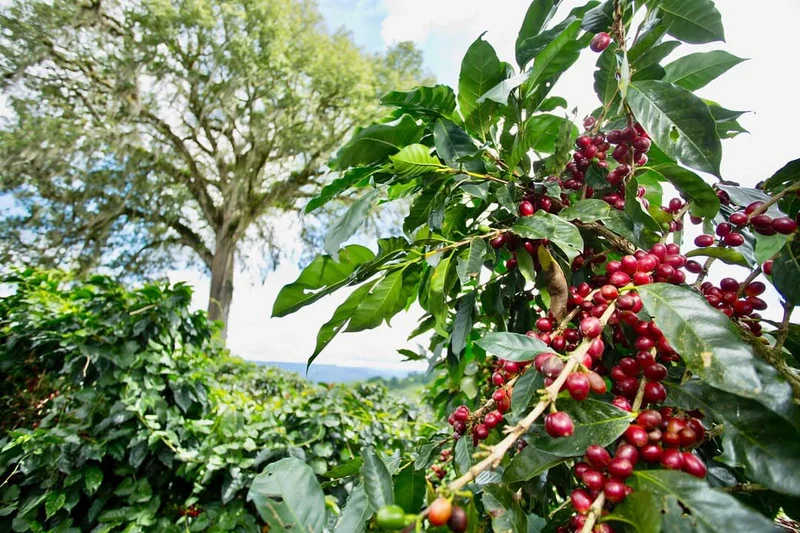
Montecillos is a pivotal coffee-growing region in southwestern Honduras, bordering El Salvador. It holds the significant distinction of being home to the country's first Denomination of Origin, "Café de Marcala," a testament to the high quality and unique profile of the coffee produced here.
1. Geography and Terroir
Montecillos is characterized by its high altitudes and unique microclimate, which are ideal for specialty coffee production.
Altitude: The region's coffee is strictly high-grown (SHG), with farms located between 1,200 and 1,700 meters above sea level.
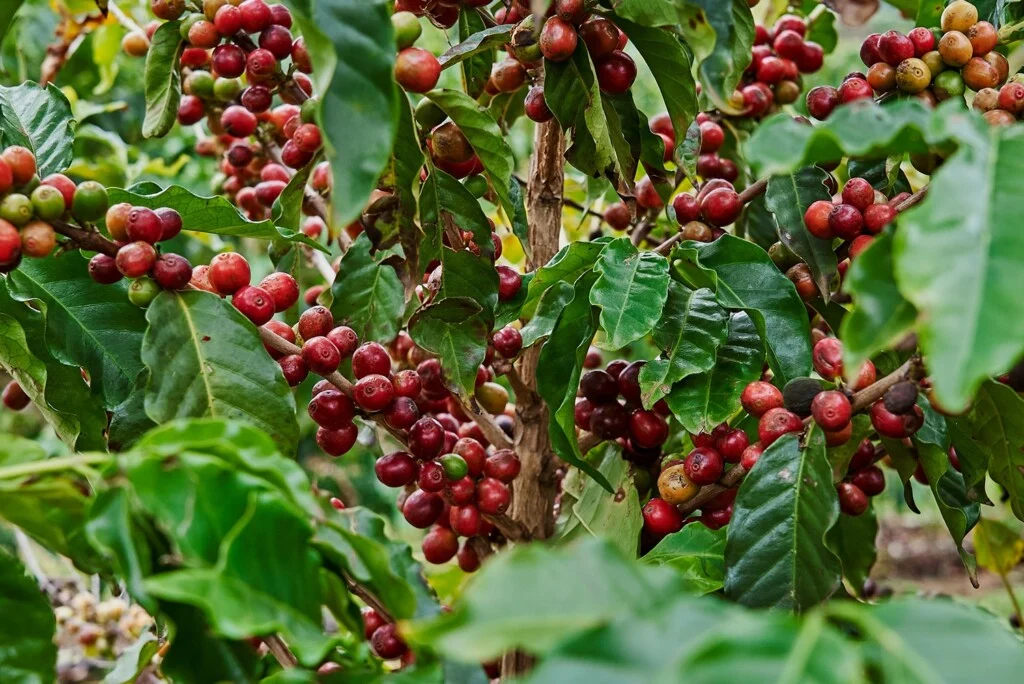
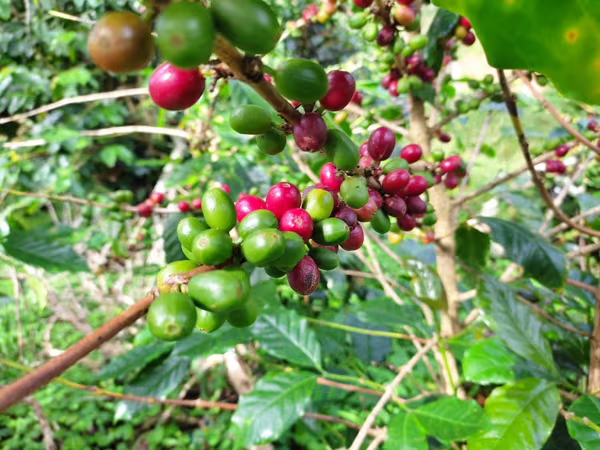
Climate: The high elevation and cool evening temperatures cause coffee cherries to ripen more slowly. This extended maturation allows the beans to develop a higher concentration of sugars and complex aromatic compounds.
Soil: The area features rich, balanced loamy and volcanic soils, nourished by surrounding plants and trees, providing essential minerals for healthy plant growth.
Key Locales: The region encompasses areas within the departments of La Paz, Comayagua, Santa Bárbara, and Intibucá.
2. Production and Scale
Montecillos is a major coffee-producing area, relying heavily on small-scale producers.
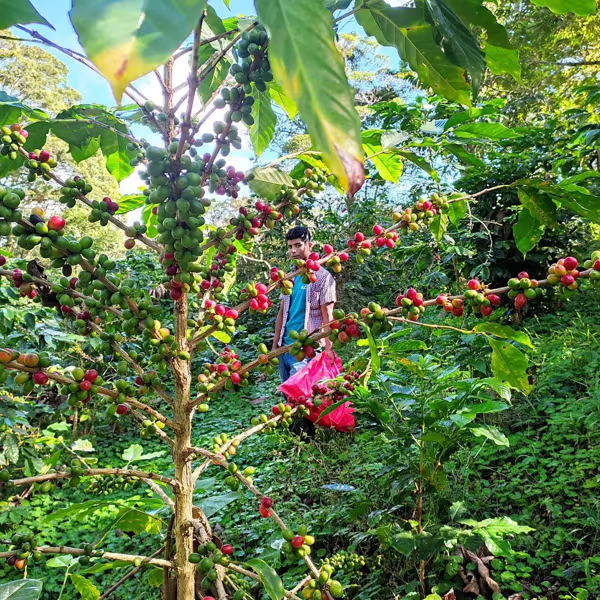
Smallholders: The industry is built on small family operations, many of whom have passed down knowledge of precise harvesting and processing for generations.
Harvest Season: The main harvest in Montecillos typically runs from December to April.
Designation: Coffee from this region often achieves a high SCAA (Specialty Coffee Association of America) cupping score, typically ranging from 84 to 88 points, and is recognized by the "Strictly High Grown" (SHG) designation.

3. Varietal Profile
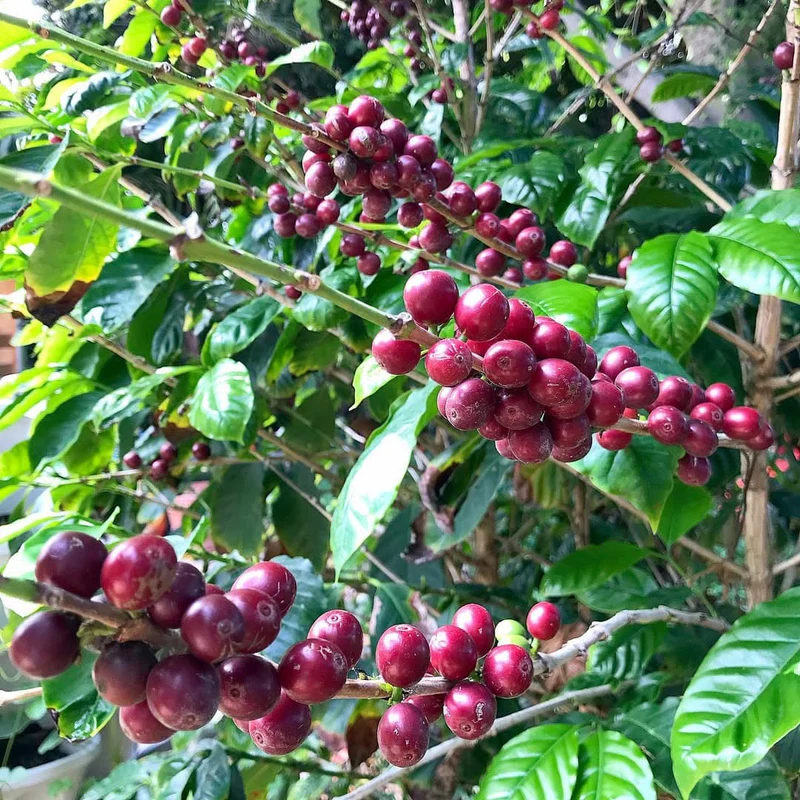
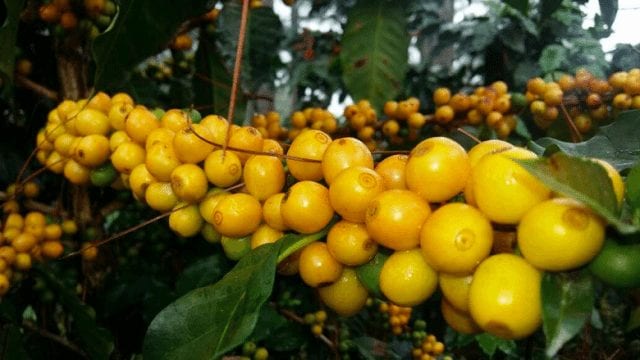
A mix of traditional and locally adapted Arabica varieties thrive in the Montecillos microclimate.
Primary Varieties: The most common varieties are Bourbon, Catuai, Caturra, and Pacas (a Bourbon mutation first discovered in El Salvador).
Disease-Resistant Cultivars: Some producers also grow the IHCAFE-developed Lempira variety, known for its resistance to coffee leaf rust.
4. Flavor and Processing
Montecillos coffee is renowned for its vibrant, fruit-forward profile and balanced characteristics.
Flavor Profile:
Acidity: Known for its lively, bright, and sparkling tartaric or citric acidity, often with notes of orange zest.
Body: Generally presents a velvety, smooth, or creamy body.
Tasting Notes: Expect distinct notes of sweet stone fruits like peach and apricot, complemented by hints of caramel and occasionally chocolate or roasted nuts.
Processing:
Washed (Wet): The predominant method used in the region. This method yields a clean cup that emphasizes the coffee's inherent acidity and brightness.
Natural and Honey: These methods are also used, particularly for specialty lots, to enhance sweetness and introduce more pronounced fruit and berry notes.
Experimental: Some producers have begun experimenting with processing methods like anaerobic fermentation to achieve unique, complex flavors.
.png)





No Comments Found!