Shopping cart
Your cart empty!
Your cart empty!
Terms of use dolor sit amet consectetur, adipisicing elit. Recusandae provident ullam aperiam quo ad non corrupti sit vel quam repellat ipsa quod sed, repellendus adipisci, ducimus ea modi odio assumenda.
Lorem ipsum dolor sit amet consectetur adipisicing elit. Sequi, cum esse possimus officiis amet ea voluptatibus libero! Dolorum assumenda esse, deserunt ipsum ad iusto! Praesentium error nobis tenetur at, quis nostrum facere excepturi architecto totam.
Lorem ipsum dolor sit amet consectetur adipisicing elit. Inventore, soluta alias eaque modi ipsum sint iusto fugiat vero velit rerum.
Sequi, cum esse possimus officiis amet ea voluptatibus libero! Dolorum assumenda esse, deserunt ipsum ad iusto! Praesentium error nobis tenetur at, quis nostrum facere excepturi architecto totam.
Lorem ipsum dolor sit amet consectetur adipisicing elit. Inventore, soluta alias eaque modi ipsum sint iusto fugiat vero velit rerum.
Dolor sit amet consectetur adipisicing elit. Sequi, cum esse possimus officiis amet ea voluptatibus libero! Dolorum assumenda esse, deserunt ipsum ad iusto! Praesentium error nobis tenetur at, quis nostrum facere excepturi architecto totam.
Lorem ipsum dolor sit amet consectetur adipisicing elit. Inventore, soluta alias eaque modi ipsum sint iusto fugiat vero velit rerum.
Sit amet consectetur adipisicing elit. Sequi, cum esse possimus officiis amet ea voluptatibus libero! Dolorum assumenda esse, deserunt ipsum ad iusto! Praesentium error nobis tenetur at, quis nostrum facere excepturi architecto totam.
Lorem ipsum dolor sit amet consectetur adipisicing elit. Inventore, soluta alias eaque modi ipsum sint iusto fugiat vero velit rerum.
Do you agree to our terms? Sign up
Copán
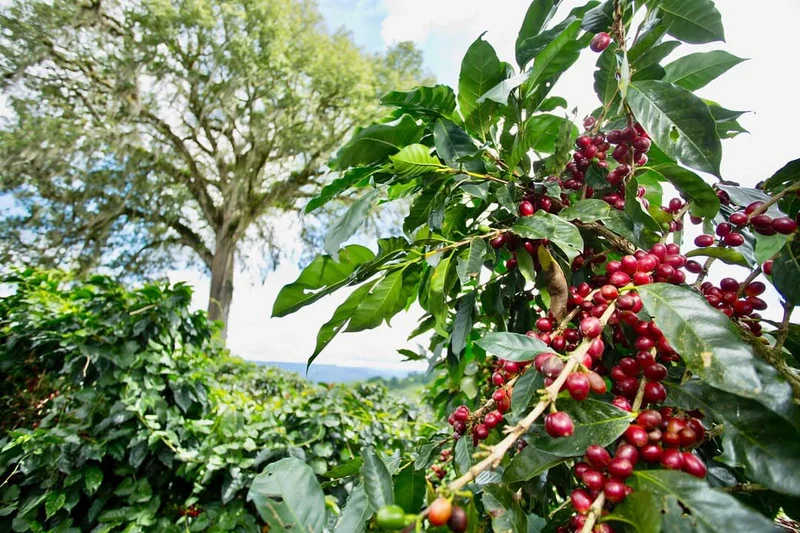
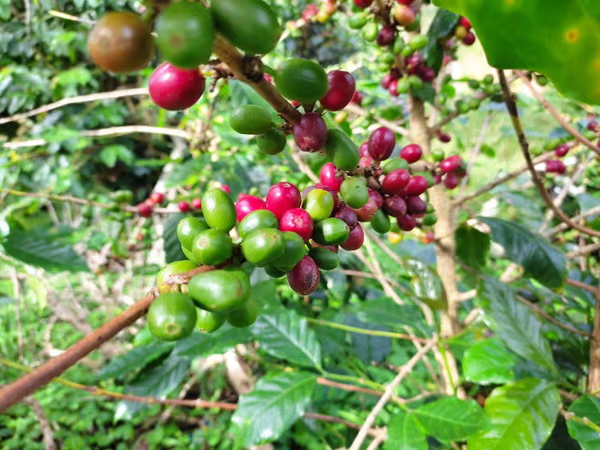
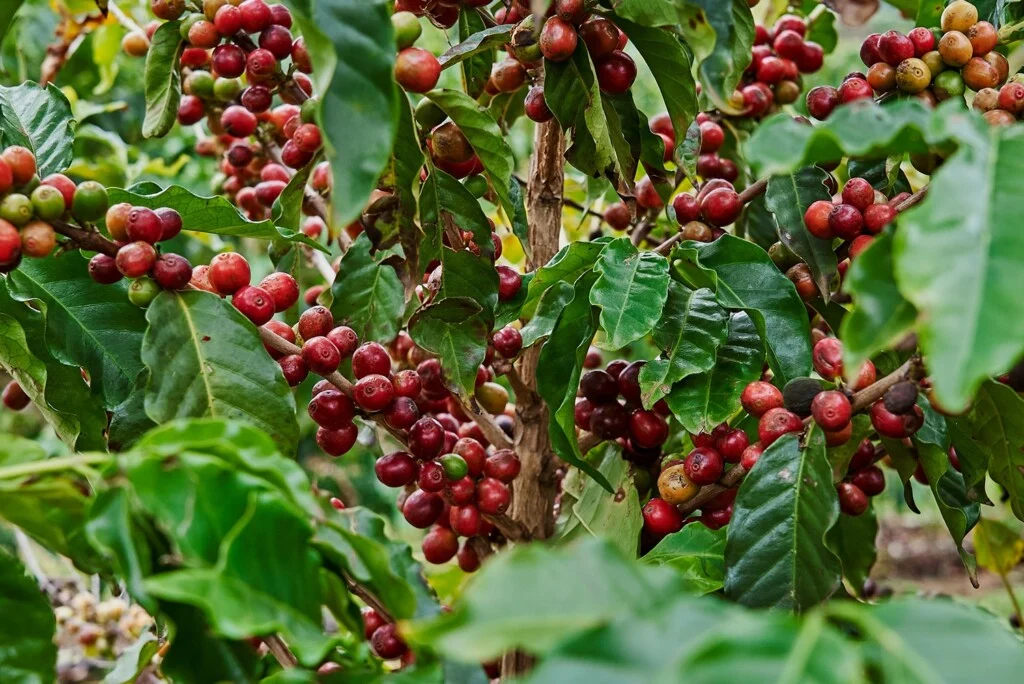
Copán, located in western Honduras along the border with Guatemala, is one of the country's most iconic and highest-regarded coffee origins. Recognized under the Honduran Western Coffees (HWC) Geographical Indication, it is a region where ancient Mayan history meets modern specialty coffee production.
1. Geography and Terroir
Copán’s terroir is defined by its dramatic highland topography and unique cooling influences.
Altitude: Coffee is grown at elevations ranging from 1,000 to 1,600 meters (roughly 3,280–5,250 feet).
Climate: It is known as one of the coolest regions in Honduras, with temperatures occasionally dropping to 11.5°C (52.7°F). This cool mountain air allows coffee cherries to ripen more slowly, leading to denser beans with higher sugar concentrations.
Soil: The region features nutrient-rich, well-balanced loamy and volcanic soils that provide excellent mineralization for Arabica cultivation.
2. Production and Scale
Honduras is the largest coffee producer in Central America, and Copán remains a critical contributor to this output.
Smallholder Backbone: The industry is dominated by small family farms; over 95% of producers nationwide operate on fewer than two hectares.
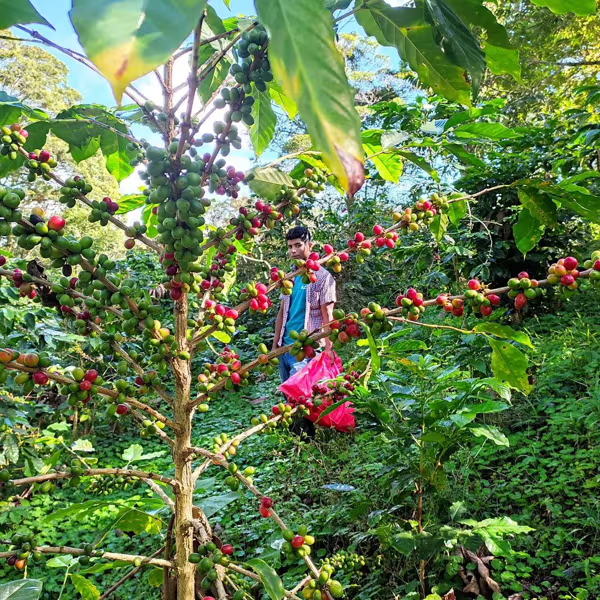
Harvest Season: The peak harvest in Copán typically occurs between November and March.
2025 Outlook: For the 2024/25 and 2025/26 marketing years, Honduras is projected to grow its total production to 5.52 million and 5.80 million bags, respectively, supported by stable weather and low rust incidence in western regions.

3. Varietal Profile
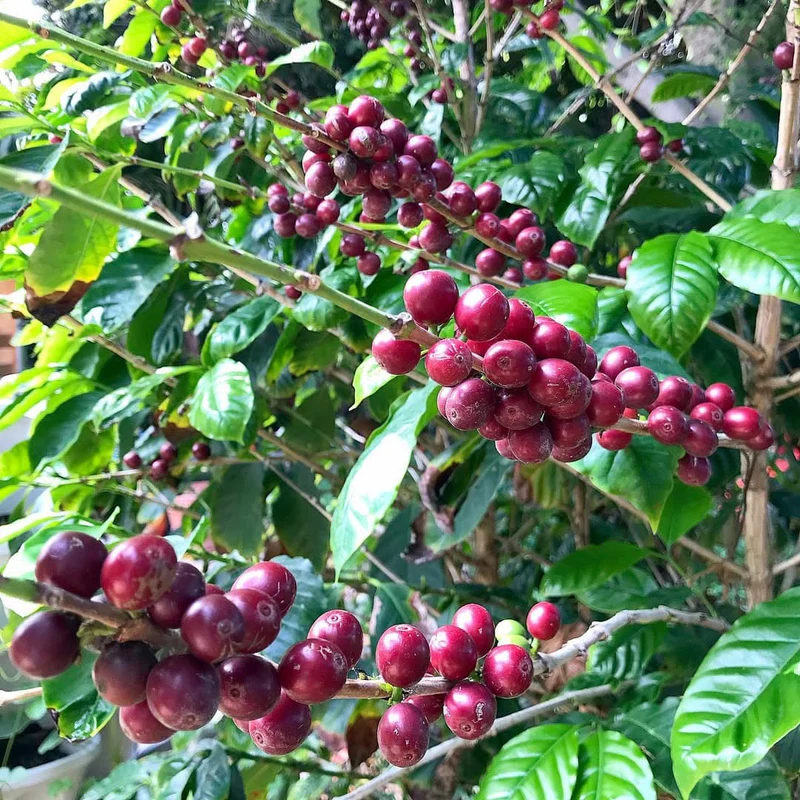
Copán primarily cultivates high-quality Arabica varieties, focusing on both traditional and improved cultivars.
Traditional Staples: Bourbon, Caturra, and Catuai are the most common.
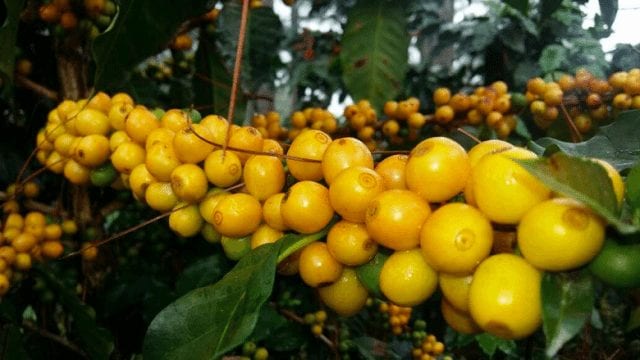
Regional Specialties: The region also grows Pacas, Typica, and the IHCAFE-developed IHCAFE 90 and Lempira varieties.
Specialty/Rare: Some high-altitude micro-lots feature Maragogipe (known as "elephant beans" for their size) and occasionally Geisha for specialty auctions.
4. Flavor and Processing
Copán coffee is celebrated for its approachability, balance, and distinctive sweetness.
Flavor Profile:
Sweetness: Strong notes of chocolate, caramel, and toffee.
Acidity: Delicate yet crisp, often presenting as orange zest or gentle citrus brightness.
Body: Typically bold, round, and creamy with a lingering, balanced aftertaste.
Processing:
Washed (Wet): The dominant method (roughly 90% of export production), resulting in clean, refined cups with highlighted acidity.
Honey & Natural: Increasing in popularity for specialty micro-lots; honey processing adds syrupy sweetness, while naturals amplify fruit and wine-like body.
Experimental: Some producers now utilize anaerobic fermentation (up to 90+ hours) to produce complex notes of fig, mango, and dark chocolate.
.png)





No Comments Found!