Shopping cart
Your cart empty!
Your cart empty!
Terms of use dolor sit amet consectetur, adipisicing elit. Recusandae provident ullam aperiam quo ad non corrupti sit vel quam repellat ipsa quod sed, repellendus adipisci, ducimus ea modi odio assumenda.
Lorem ipsum dolor sit amet consectetur adipisicing elit. Sequi, cum esse possimus officiis amet ea voluptatibus libero! Dolorum assumenda esse, deserunt ipsum ad iusto! Praesentium error nobis tenetur at, quis nostrum facere excepturi architecto totam.
Lorem ipsum dolor sit amet consectetur adipisicing elit. Inventore, soluta alias eaque modi ipsum sint iusto fugiat vero velit rerum.
Sequi, cum esse possimus officiis amet ea voluptatibus libero! Dolorum assumenda esse, deserunt ipsum ad iusto! Praesentium error nobis tenetur at, quis nostrum facere excepturi architecto totam.
Lorem ipsum dolor sit amet consectetur adipisicing elit. Inventore, soluta alias eaque modi ipsum sint iusto fugiat vero velit rerum.
Dolor sit amet consectetur adipisicing elit. Sequi, cum esse possimus officiis amet ea voluptatibus libero! Dolorum assumenda esse, deserunt ipsum ad iusto! Praesentium error nobis tenetur at, quis nostrum facere excepturi architecto totam.
Lorem ipsum dolor sit amet consectetur adipisicing elit. Inventore, soluta alias eaque modi ipsum sint iusto fugiat vero velit rerum.
Sit amet consectetur adipisicing elit. Sequi, cum esse possimus officiis amet ea voluptatibus libero! Dolorum assumenda esse, deserunt ipsum ad iusto! Praesentium error nobis tenetur at, quis nostrum facere excepturi architecto totam.
Lorem ipsum dolor sit amet consectetur adipisicing elit. Inventore, soluta alias eaque modi ipsum sint iusto fugiat vero velit rerum.
Do you agree to our terms? Sign up
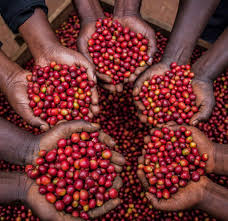
Uganda is one of Africa’s most significant coffee-producing nations, distinguished by its unique heritage as the birthplace of Coffea canephora—commonly known as Robusta. As Africa’s largest Robusta producer and the world’s sixth-largest coffee exporter, Uganda plays a central role in the global coffee economy. Coffee contributes between 20% and 30% of the country’s total export earnings and generates over USD 900 million annually, making it one of Uganda’s most valuable agricultural commodities. The industry supports millions of smallholder households, most cultivating less than two hectares, and forms a vital pillar of rural livelihoods.
Uganda’s coffee landscape is geographically diverse, enabling the production of both high-quality Robusta and premium Arabica. Robusta thrives in the lowland regions surrounding Lake Victoria—districts such as Luwero, Mukono, Masaka, and the central and western forests—where fertile soils, high humidity, and natural disease resistance Favor vigorous growth. Ugandan Robusta is typically appreciated for its full body, smooth mouthfeel, deep earthy aroma, and flavour notes ranging from dark chocolate and nuts to subtle woodiness, making it an essential base for espresso blends worldwide.
Arabica coffee, though smaller in volume, occupies Uganda’s high-elevation zones and is recognized for its quality potential. The most important regions include the slopes of Mount Elgon (Bugisu/Bugisu Arabica), the Rwenzori Mountains (Rwashamaire & Drugar varietals), the West Nile highlands, and isolated pockets in southwestern hills. Grown between 1,300 and 2,300 meters above sea level, Ugandan Arabica benefits from cool temperatures, volcanic soils, and ample rainfall. These conditions produce beans with bright, winey acidity, sweet fruit notes, floral aromatics, and clean, balanced finishes—profiles that are increasingly in demand in specialty markets.
In recent years, Uganda has intensified investment in coffee research and development, including the release of improved, pest- and disease-resistant varieties. Robusta clones developed by the National Coffee Research Institute (NaCORI) offer higher yields and resilience against coffee wilt disease, helping stabilize production. Expanding adoption of sustainable farming practices—shade-grown systems, organic composting, soil conservation, and selective hand-picking—has further enhanced bean quality.
Uganda’s specialty coffee sector has grown notably: approximately 29%–32% of all Ugandan coffee now qualifies as specialty, according to the Uganda Coffee Development Authority (UCDA). Specialty grading emphasizes bean integrity, moisture content (maximum 12%), minimal defects, and high cup scores. For Arabica, washed Bugisu often attains scores above 80 due to its clarity and complex acidity. Uganda also uses screen-size grades such as AA, A+, and PB (Peaberry) to classify cherries, with higher grades correlating with size uniformity, density, and reduced defect levels.
Processing methods also influence Uganda’s flavour diversity. While much Robusta is traditionally sun-dried (natural process), Arabica is often washed to highlight its brightness, though natural and honey-processed coffees are becoming more common among specialty-focused cooperatives. These innovations, along with traceable micro-lots and farmer associations, have expanded Uganda’s reputation as more than a bulk Robusta supplier.
Overall, Uganda’s coffee sector forms a dynamic blend of tradition, ecological richness, and modern innovation. With its native Robusta heritage, high-grown Arabica potential, and growing specialty recognition, Uganda stands as one of Africa’s most promising and important coffee origins—known for producing coffees that are bold, structured, flavourful, and increasingly refined for global specialty markets.
.png)





No Comments Found!