Shopping cart
Your cart empty!
Your cart empty!
Terms of use dolor sit amet consectetur, adipisicing elit. Recusandae provident ullam aperiam quo ad non corrupti sit vel quam repellat ipsa quod sed, repellendus adipisci, ducimus ea modi odio assumenda.
Lorem ipsum dolor sit amet consectetur adipisicing elit. Sequi, cum esse possimus officiis amet ea voluptatibus libero! Dolorum assumenda esse, deserunt ipsum ad iusto! Praesentium error nobis tenetur at, quis nostrum facere excepturi architecto totam.
Lorem ipsum dolor sit amet consectetur adipisicing elit. Inventore, soluta alias eaque modi ipsum sint iusto fugiat vero velit rerum.
Sequi, cum esse possimus officiis amet ea voluptatibus libero! Dolorum assumenda esse, deserunt ipsum ad iusto! Praesentium error nobis tenetur at, quis nostrum facere excepturi architecto totam.
Lorem ipsum dolor sit amet consectetur adipisicing elit. Inventore, soluta alias eaque modi ipsum sint iusto fugiat vero velit rerum.
Dolor sit amet consectetur adipisicing elit. Sequi, cum esse possimus officiis amet ea voluptatibus libero! Dolorum assumenda esse, deserunt ipsum ad iusto! Praesentium error nobis tenetur at, quis nostrum facere excepturi architecto totam.
Lorem ipsum dolor sit amet consectetur adipisicing elit. Inventore, soluta alias eaque modi ipsum sint iusto fugiat vero velit rerum.
Sit amet consectetur adipisicing elit. Sequi, cum esse possimus officiis amet ea voluptatibus libero! Dolorum assumenda esse, deserunt ipsum ad iusto! Praesentium error nobis tenetur at, quis nostrum facere excepturi architecto totam.
Lorem ipsum dolor sit amet consectetur adipisicing elit. Inventore, soluta alias eaque modi ipsum sint iusto fugiat vero velit rerum.
Do you agree to our terms? Sign up
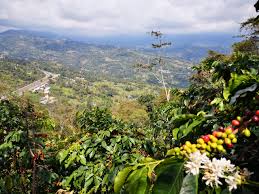
South America is the largest coffee-producing continent and is globally renowned for both volume and quality, offering an unparalleled diversity of coffees. The region’s unique geography, volcanic and alluvial soils, varying altitudes, and tropical to subtropical climates create ideal conditions for cultivating both Arabica and Robusta coffees, allowing producers to meet demands across commercial and specialty markets. The primary coffee-producing countries are Brazil, Colombia, Peru, Ecuador, Bolivia, and Venezuela, with each country offering distinct terroir-driven flavors and production approaches.
Brazil is the world’s largest coffee producer, supplying roughly one-third of global coffee. Coffee cultivation spans multiple states, including Minas Gerais, São Paulo, Espírito Santo, Bahia, Paraná, and Rondônia, at elevations ranging from 500 to 1,500 meters. Brazil produces both Arabica and Robusta, with Arabica concentrated in highland regions. Brazilian coffees are celebrated for their medium body, low acidity, and sweet, nutty, or chocolatey flavors, making them highly versatile for espresso blends, instant coffee, and commercial consumption. Specialty estates in regions such as Sul de Minas, Cerrado, Mogiana, and Espírito Santo focus on high-quality Arabica, employing washed, natural, or pulped natural processing methods to enhance flavor complexity. Brazil’s vast production infrastructure, including large-scale mills and export systems, enables it to dominate global markets while also increasingly supplying specialty-grade beans.
Colombia is world-famous for its premium Arabica coffee, grown primarily in the Andes Mountains at 1,200–1,800 meters. Key producing regions include Antioquia, Huila, Tolima, Nariño, Cauca, and Sierra Nevada de Santa Marta. Colombian coffees are predominantly washed Arabica, producing clean, vibrant cups with bright acidity, medium body, and flavor notes ranging from red fruits and citrus to chocolate and caramel. Smallholder farmers dominate production, often organized into cooperatives that provide technical training, quality control, and international export access. Colombia’s internationally recognized coffee quality is reflected in classifications such as Excelso and Supremo, representing uniformity and premium Arabica beans. The country has a strong focus on sustainable and environmentally responsible practices, including shade-grown coffee and water-efficient processing.
Peru produces mainly Arabica coffee, cultivated at 1,000–2,000 meters in regions such as San Martín, Cajamarca, Cusco, and Junín. Peruvian coffees are often shade-grown and organic, reflecting the country’s emphasis on sustainability. They are known for bright acidity, medium body, and floral, fruity, or nutty flavors, making them highly sought after in specialty markets. Smallholder cooperatives play a key role in improving quality, traceability, and market access, while technical assistance programs help maintain high standards and ensure resilience against climate variability and plant diseases.
Ecuador produces Arabica coffee primarily in the Sierra highlands at 1,000–2,000 meters, with smaller Robusta cultivation along the coastal lowlands. Ecuadorian coffees feature balanced acidity, medium body, and sweet, chocolatey, or mild fruit notes. Specialty producers have adopted eco-friendly, traceable, and organic farming practices, which are increasingly appealing to international buyers focused on sustainability and quality. Cooperatives and local organizations support postharvest processing, quality control, and export logistics, helping smallholders reach global markets.
Bolivia cultivates Arabica coffee at 1,200–1,800 meters, primarily in regions such as Cochabamba, La Paz, Santa Cruz, and Tarija. Bolivian coffees are mostly washed and shade-grown, offering medium body, bright acidity, and delicate floral or citrus notes. Smallholder farmers dominate production, often organized in cooperatives that provide technical support, quality monitoring, and access to international specialty buyers. Bolivia’s coffees are prized for their unique, terroir-driven flavors and limited availability, which enhance their value in premium markets.
Venezuela, once a significant coffee exporter, produces Arabica in mountainous regions such as Táchira, Mérida, and Trujillo, at elevations of 1,000–1,800 meters. Venezuelan coffees are known for medium body, mild acidity, and chocolate, nutty, or fruity flavors. Although political and economic challenges have led to a decline in production, efforts are underway to revitalize farms, improve processing infrastructure, and reestablish quality-focused exports, particularly in specialty and boutique markets.
Across South America, coffee cultivation is predominantly small- and medium-scale, often family-run, with many farms incorporating shade trees, intercropping, and organic practices. Processing methods vary: washed Arabica dominates in highland areas, while natural or pulped natural processing is common in regions like Brazil’s Cerrado. Sustainable farming practices—such as shade-grown cultivation, soil conservation, water management, and pest control—are increasingly prioritized to maintain quality, protect ecosystems, and support farmer livelihoods.
South America’s coffees are valued globally for their diverse flavor profiles, consistency, and versatility. From Brazil’s chocolatey, nutty Arabicas to Colombia’s bright, fruity cups, Peru’s floral coffees, and Panama’s specialty Geisha collaborations, the continent produces a spectrum of coffees suitable for both commercial blends and specialty brewing methods. Strong cooperative networks, government programs, and industry initiatives continue to enhance quality, traceability, and sustainability, ensuring South America remains the backbone of the global coffee industry.
In summary, South America combines volume, quality, tradition, and innovation to produce coffees that dominate global markets while continually pushing boundaries in the specialty and sustainable sectors. Its rich diversity of climates, altitudes, soils, and farming cultures ensures that the region will remain central to the world’s coffee supply and a benchmark for quality, variety, and sustainability.
.png)





No Comments Found!