Shopping cart
Your cart empty!
Your cart empty!
Terms of use dolor sit amet consectetur, adipisicing elit. Recusandae provident ullam aperiam quo ad non corrupti sit vel quam repellat ipsa quod sed, repellendus adipisci, ducimus ea modi odio assumenda.
Lorem ipsum dolor sit amet consectetur adipisicing elit. Sequi, cum esse possimus officiis amet ea voluptatibus libero! Dolorum assumenda esse, deserunt ipsum ad iusto! Praesentium error nobis tenetur at, quis nostrum facere excepturi architecto totam.
Lorem ipsum dolor sit amet consectetur adipisicing elit. Inventore, soluta alias eaque modi ipsum sint iusto fugiat vero velit rerum.
Sequi, cum esse possimus officiis amet ea voluptatibus libero! Dolorum assumenda esse, deserunt ipsum ad iusto! Praesentium error nobis tenetur at, quis nostrum facere excepturi architecto totam.
Lorem ipsum dolor sit amet consectetur adipisicing elit. Inventore, soluta alias eaque modi ipsum sint iusto fugiat vero velit rerum.
Dolor sit amet consectetur adipisicing elit. Sequi, cum esse possimus officiis amet ea voluptatibus libero! Dolorum assumenda esse, deserunt ipsum ad iusto! Praesentium error nobis tenetur at, quis nostrum facere excepturi architecto totam.
Lorem ipsum dolor sit amet consectetur adipisicing elit. Inventore, soluta alias eaque modi ipsum sint iusto fugiat vero velit rerum.
Sit amet consectetur adipisicing elit. Sequi, cum esse possimus officiis amet ea voluptatibus libero! Dolorum assumenda esse, deserunt ipsum ad iusto! Praesentium error nobis tenetur at, quis nostrum facere excepturi architecto totam.
Lorem ipsum dolor sit amet consectetur adipisicing elit. Inventore, soluta alias eaque modi ipsum sint iusto fugiat vero velit rerum.
Do you agree to our terms? Sign up
Beyond the export maps and the branded bags of Tanna and Santo lies the true, beating heart of Vanuatu’s relationship with coffee. On the central islands of the archipelago—Pentecost, Ambrym, Epi, and across countless smaller isles—coffee is not an industry. It is a living tradition, a domestic staple, and a thread woven quietly into the fabric of kastom (customary) life. This is the story of coffee growing not for the world, but for the village.
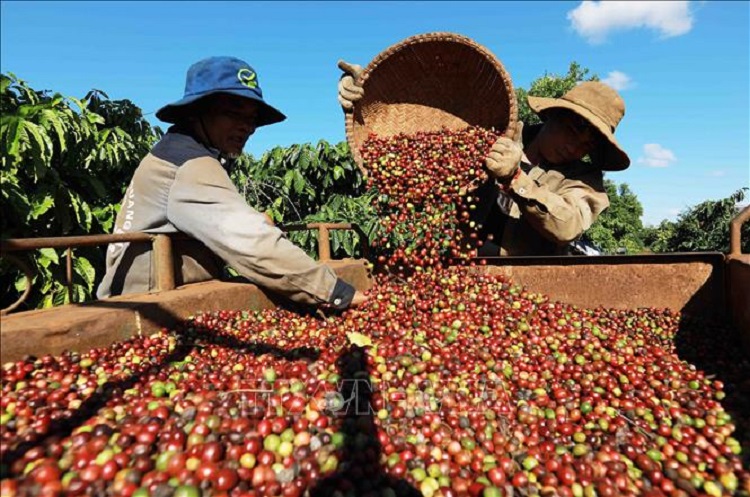
Unlike the consolidated slopes of Tanna or the expansive plains of Santo, coffee here exists in a constellation of tiny, scattered plots. On the ash-black plains beneath Ambrym’s brooding twin volcanoes, in the deep, silent valleys of Pentecost behind the famous land divers, and on the lush slopes of Epi, coffee trees are garden citizens. They are planted alongside towering taro, vibrant hibiscus, and most importantly, the revered kava plant. This is subsistence polyculture at its most resilient: a family’s food, medicine, ceremony, and gentle stimulants all growing in a single, shaded, and fertile space.
The soil, continually renewed by volcanic ash from active vents, is phenomenally rich. Yet, this fertility supports a deeply localized cycle. There are no cooperatives, no central washing stations, and no export contracts. The entire process—from planting to drying on bamboo mats—is contained within the family or the community.
To understand the purpose of this coffee, one must step into the nakamal, the community meeting ground and kava bar. As night falls and the shell of kava is shared, coffee often plays a supporting, yet vital, role. A large, blackened pot of locally grown, dark-roasted coffee brews over a fire. It is served sweetened, if sugar is available, in chipped cups or reused jars.
This is not a cupping flight. This is social glue. It is the warm, bitter beverage that accompanies conversation, that sobers after kava, and that welcomes visitors. The coffee served here is almost always from “olgeta ples,” from right around here. Its flavor is a familiar, robust, and earthy backdrop—notes of wood smoke, dark cocoa, and a distinct, grounding earthiness. It is a taste of home, not a product for critique.
In the cash-light economies of these islands, coffee functions as a soft currency and a social safeguard. A bag of sun-dried parchment might be traded for fish, woven mats, or school supplies. It is sold in small handfuls at the local market in Lonorore (Pentecost) or Ranon (Ambrym), bought by neighbors or the occasional shopkeeper. For many families, it provides a tiny, crucial trickle of disposable income—enough to buy soap, kerosene, or a treat for the children.
Yet, this very informality renders it invisible to the formal sector. The quality is wildly inconsistent; processing is rudimentary. A cyclone, a family crisis, or simply a shift in attention to more pressing crops can make a garden’s coffee vanish from even this local market for a season. It is a non-commercial crop in the truest sense: responsive only to the rhythms and needs of the household.
These scattered gardens are, unintentionally, genetic and cultural archives. Within them grow old, unclassified Arabica seedlings—likely descendants of Typica or Bourbon brought by early planters or missionaries. They have adapted over generations to their specific microclimates, creating a living library of heirloom varieties that has never been cataloged. The farming knowledge, passed down without formal training, represents a profound, intuitive understanding of agroecology.
The future of this coffee culture is not about transformation into an export zone. Its value lies in its continuity and authenticity. For the outside world, it offers a crucial lesson: that coffee’s highest purpose can be cultural and communal, not merely commercial. For NGOs and development partners, supporting this system means strengthening its resilience—perhaps through better post-harvest training to reduce spoilage, or helping establish tiny, community-scale roasting for local value addition.
The coffee of Pentecost, Ambrym, and the inner islands will never bear a premium single-origin label. You will not find tasting notes of jasmine or bergamot. Instead, you will find the spirit of place: the taste of volcanic soil, wood smoke, community, and self-reliance.
It is a powerful reminder that before coffee is a global commodity, it is a cherished local plant. In these gardens, the true, quiet heartbeat of Vanuatu’s coffee story continues, unfazed by market trends, speaking in the simple, profound language of daily life and shared cups in the nakamal dark