Shopping cart
Your cart empty!
Your cart empty!
Terms of use dolor sit amet consectetur, adipisicing elit. Recusandae provident ullam aperiam quo ad non corrupti sit vel quam repellat ipsa quod sed, repellendus adipisci, ducimus ea modi odio assumenda.
Lorem ipsum dolor sit amet consectetur adipisicing elit. Sequi, cum esse possimus officiis amet ea voluptatibus libero! Dolorum assumenda esse, deserunt ipsum ad iusto! Praesentium error nobis tenetur at, quis nostrum facere excepturi architecto totam.
Lorem ipsum dolor sit amet consectetur adipisicing elit. Inventore, soluta alias eaque modi ipsum sint iusto fugiat vero velit rerum.
Sequi, cum esse possimus officiis amet ea voluptatibus libero! Dolorum assumenda esse, deserunt ipsum ad iusto! Praesentium error nobis tenetur at, quis nostrum facere excepturi architecto totam.
Lorem ipsum dolor sit amet consectetur adipisicing elit. Inventore, soluta alias eaque modi ipsum sint iusto fugiat vero velit rerum.
Dolor sit amet consectetur adipisicing elit. Sequi, cum esse possimus officiis amet ea voluptatibus libero! Dolorum assumenda esse, deserunt ipsum ad iusto! Praesentium error nobis tenetur at, quis nostrum facere excepturi architecto totam.
Lorem ipsum dolor sit amet consectetur adipisicing elit. Inventore, soluta alias eaque modi ipsum sint iusto fugiat vero velit rerum.
Sit amet consectetur adipisicing elit. Sequi, cum esse possimus officiis amet ea voluptatibus libero! Dolorum assumenda esse, deserunt ipsum ad iusto! Praesentium error nobis tenetur at, quis nostrum facere excepturi architecto totam.
Lorem ipsum dolor sit amet consectetur adipisicing elit. Inventore, soluta alias eaque modi ipsum sint iusto fugiat vero velit rerum.
Do you agree to our terms? Sign up
Opalaca
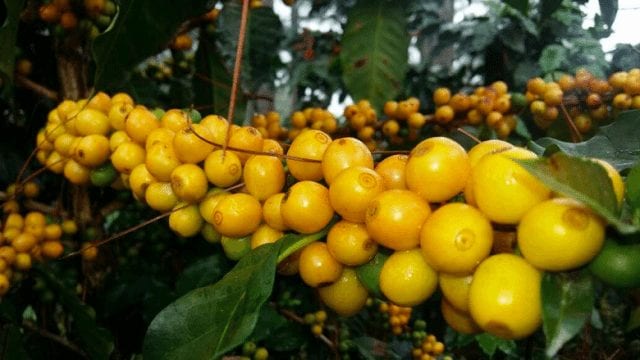
Opalaca is one of the more secluded and high-altitude coffee regions in Honduras. Located in the north-central part of the country, primarily within the departments of Intibucá, Lempira, and Santa Bárbara, it is named after the Opalaca mountain range and is celebrated for its complex, fruity cup profiles.
1. Geography and Terroir
Opalaca’s terroir is defined by its rugged mountainous terrain and high-elevation plateaus.
Altitude: Coffee in this region is grown between 1,100 and 1,750 meters (3,600–5,740 feet), with much of the production falling into the Strictly High Grown (SHG) category.
Climate: The region experiences a humid, subtropical mountain climate. The high moisture levels and consistent cloud cover contribute to a slightly longer drying process compared to drier regions like Copán.
Soil: The soil is predominantly volcanic and loamy, rich in organic matter, which supports vigorous tree growth and complex flavor development.
2. Production and Scale
While less internationally famous than Copán or Montecillos, Opalaca is a cornerstone of the Honduran specialty coffee sector.
Small-Scale Farmers: Like much of Honduras, production is driven by smallholders organized into cooperatives. These cooperatives are vital for providing the infrastructure needed to process coffee in these remote highland areas.
Harvest Season: The harvest typically begins in late November and extends through March, depending on the specific micro-lot altitude.
2025 Market Position: For the 2025 export season, Opalaca continues to be a favorite for "Direct Trade" buyers seeking unique flavor profiles that deviate from the traditional chocolate-heavy Central American profile.

3. Varietal Profile
Opalaca maintains a diverse mix of Arabica varieties that balance yield with high cup quality.
Core Varieties: Bourbon, Catuai, and Caturra are the historical foundation of the region.
Regional Selections: There is a significant presence of Typica, which is favored by older farms for its refined cup quality, though it is more susceptible to rust.
Modern Hybrids: To combat environmental challenges, many farmers have integrated IHCAFE-90 and Lempira, which are bred to withstand coffee leaf rust while maintaining the region's signature acidity.
4. Flavor and Processing
Opalaca coffee is often described as the most "vibrant" and "complex" of the six Honduran regions, leaning more toward tropical fruit notes than nuttiness.
Flavor Profile:
Acidity: Fine, balanced, and distinctly citric, often compared to green apple or lime.
Sweetness: A honey-like or cane sugar sweetness that lingers on the palate.
Tasting Notes: It is famous for its tropical fruit characteristics—notes of grape, mulberry, and berries are common, often with a subtle floral aroma.
Processing:
Washed (Wet): The standard method, which highlights the region's delicate acidity and fruit clarity.
Natural Processing: Because Opalaca is slightly more humid, natural processing requires extreme care (often using raised beds in greenhouses) but produces spectacular results with heavy berry and wine-like flavors.
Community Lots: Many farmers deliver cherries to central wet mills, which helps maintain consistency across the diverse mountain range.