Shopping cart
Your cart empty!
Your cart empty!
Terms of use dolor sit amet consectetur, adipisicing elit. Recusandae provident ullam aperiam quo ad non corrupti sit vel quam repellat ipsa quod sed, repellendus adipisci, ducimus ea modi odio assumenda.
Lorem ipsum dolor sit amet consectetur adipisicing elit. Sequi, cum esse possimus officiis amet ea voluptatibus libero! Dolorum assumenda esse, deserunt ipsum ad iusto! Praesentium error nobis tenetur at, quis nostrum facere excepturi architecto totam.
Lorem ipsum dolor sit amet consectetur adipisicing elit. Inventore, soluta alias eaque modi ipsum sint iusto fugiat vero velit rerum.
Sequi, cum esse possimus officiis amet ea voluptatibus libero! Dolorum assumenda esse, deserunt ipsum ad iusto! Praesentium error nobis tenetur at, quis nostrum facere excepturi architecto totam.
Lorem ipsum dolor sit amet consectetur adipisicing elit. Inventore, soluta alias eaque modi ipsum sint iusto fugiat vero velit rerum.
Dolor sit amet consectetur adipisicing elit. Sequi, cum esse possimus officiis amet ea voluptatibus libero! Dolorum assumenda esse, deserunt ipsum ad iusto! Praesentium error nobis tenetur at, quis nostrum facere excepturi architecto totam.
Lorem ipsum dolor sit amet consectetur adipisicing elit. Inventore, soluta alias eaque modi ipsum sint iusto fugiat vero velit rerum.
Sit amet consectetur adipisicing elit. Sequi, cum esse possimus officiis amet ea voluptatibus libero! Dolorum assumenda esse, deserunt ipsum ad iusto! Praesentium error nobis tenetur at, quis nostrum facere excepturi architecto totam.
Lorem ipsum dolor sit amet consectetur adipisicing elit. Inventore, soluta alias eaque modi ipsum sint iusto fugiat vero velit rerum.
Do you agree to our terms? Sign up
Oaxaca
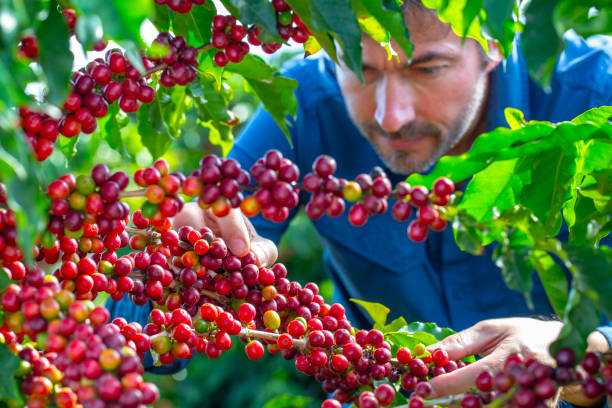
Oaxaca is celebrated as the "cultural heart" of Mexican coffee, renowned for its preservation of heirloom Arabica strains and its traditional, shade-grown mountain farming. It is home to the world-famous Pluma variety and produced by smallholder farmers in some of the most remote "cloud forests" in North America.
1. Geography and Terroir
Location: Located in southern Mexico, where the Sierra Madre del Sur and the Sierra de Juárez mountain ranges converge.
Key Sub-Regions: The most prestigious zone is Pluma Hidalgo, which holds a specific Denomination of Origin. Other vital zones include the Mixteca, Cañada, and Sierra Norte regions.
Altitude: One of Mexico's highest growing regions, with plots typically situated between 1,200 and 1,900 meters above sea level (MASL).
Climate: A unique "cloud forest" environment characterized by cool temperatures and high atmospheric moisture, which leads to very slow cherry maturation and dense, flavor-rich beans.
Soil: Highly diverse, ranging from metamorphic rock in the Pluma region to clay-rich volcanic earth in the northern sierras.
2. Production and Scale
Output: Accounts for roughly 8% to 11% of Mexico's national production.
Yield: Traditionally has the lowest yield per hectare in Mexico. This is due to the extreme age of the trees (some over 80 years old), traditional low-intensity farming, and the difficulty of transporting materials into remote mountains.
Producer Profile: Extremely fragmented production; it is managed by over 100,000 smallholders, many of whom belong to indigenous Zapotec, Chinantec, and Mazatec communities.
Harvest Season: Due to the high altitude and cool climate, the harvest is one of the latest in Mexico, often peaking between January and April.

3. Varietal Profile
Heirloom Sanctuary: Oaxaca is a "living museum" for ancient Arabica strains, primarily Typica and Bourbon, which have largely disappeared from other parts of the world due to their low yields.
Pluma Variety: The region’s crown jewel—a natural mutation of Typica that has adapted over 150 years to the specific Oaxacan microclimate.
Specialty Focus: While some rust-resistant varieties like Oro Azteca have been introduced, specialty buyers specifically seek out Oaxaca for its high-altitude heirloom Typica.
4. Flavor and Processing
Classic Profile: Oaxacan coffee is known for its delicacy, tea-like body, and complex floral fragrances.
Flavor Notes: Signature characteristics include:
Core: Maple syrup, piloncillo (raw cane sugar), and milk chocolate.
Accents: Floral jasmine, apricot, and a bright, tangerine-like acidity.
Processing Trends:
Washed: The traditional standard. Because water is scarce in some remote mountain villages, many farmers utilize artisanal fermentation in small wooden tanks.
Sun-Dried: Most coffee is dried on small backyard patios or "sarapes" (raised beds), contributing to a very clean and consistent cup.
Organic Tradition: Much of Oaxaca's coffee is "organic by default," as many indigenous producers avoid chemical fertilizers in favor of traditional compost and forest mulch.