Shopping cart
Your cart empty!
Your cart empty!
Terms of use dolor sit amet consectetur, adipisicing elit. Recusandae provident ullam aperiam quo ad non corrupti sit vel quam repellat ipsa quod sed, repellendus adipisci, ducimus ea modi odio assumenda.
Lorem ipsum dolor sit amet consectetur adipisicing elit. Sequi, cum esse possimus officiis amet ea voluptatibus libero! Dolorum assumenda esse, deserunt ipsum ad iusto! Praesentium error nobis tenetur at, quis nostrum facere excepturi architecto totam.
Lorem ipsum dolor sit amet consectetur adipisicing elit. Inventore, soluta alias eaque modi ipsum sint iusto fugiat vero velit rerum.
Sequi, cum esse possimus officiis amet ea voluptatibus libero! Dolorum assumenda esse, deserunt ipsum ad iusto! Praesentium error nobis tenetur at, quis nostrum facere excepturi architecto totam.
Lorem ipsum dolor sit amet consectetur adipisicing elit. Inventore, soluta alias eaque modi ipsum sint iusto fugiat vero velit rerum.
Dolor sit amet consectetur adipisicing elit. Sequi, cum esse possimus officiis amet ea voluptatibus libero! Dolorum assumenda esse, deserunt ipsum ad iusto! Praesentium error nobis tenetur at, quis nostrum facere excepturi architecto totam.
Lorem ipsum dolor sit amet consectetur adipisicing elit. Inventore, soluta alias eaque modi ipsum sint iusto fugiat vero velit rerum.
Sit amet consectetur adipisicing elit. Sequi, cum esse possimus officiis amet ea voluptatibus libero! Dolorum assumenda esse, deserunt ipsum ad iusto! Praesentium error nobis tenetur at, quis nostrum facere excepturi architecto totam.
Lorem ipsum dolor sit amet consectetur adipisicing elit. Inventore, soluta alias eaque modi ipsum sint iusto fugiat vero velit rerum.
Do you agree to our terms? Sign up
The Mount Elgon region, straddling the Uganda-Kenya border, is a highland coffee-growing area named after the ancient volcanic mountain that dominates the landscape. In Uganda, the region includes districts such as Mbale, Sironko, Bududa, and Kapchorwa, while the Kenyan side encompasses areas like Bungoma and Trans-Nzoia counties. The region is renowned for its Arabica coffee, particularly high-quality washed Arabica varieties, although Robusta is also grown at lower elevations on the Ugandan side.
The area features high elevations ranging from 1,400 to over 2,200 meters above sea level, steep volcanic soils rich in organic matter, and a cool tropical climate with abundant rainfall between 1,200–2,000 mm per year. These conditions create an ideal environment for coffee cultivation, allowing the beans to develop complex flavors, acidity, and aroma associated with premium Arabica coffee.
Coffee farming in Mount Elgon is primarily smallholder-based, with farmers cultivating plots often less than one hectare. Mixed farming is common, with coffee intercropped alongside bananas, maize, beans, and root crops. Shade trees are frequently preserved, helping to regulate microclimates, maintain soil fertility, and enhance bean quality. Farming practices combine traditional methods with modern agronomy, including the use of improved seedlings, pruning, mulching, and selective disease control.
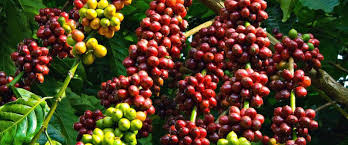
The harvest season occurs once annually, typically between October and February, following the major rainy season. Coffee cherries are hand-picked selectively, ensuring that only fully ripe cherries are collected. Processing is predominantly washed (wet) method, where cherries are pulped, fermented, washed, and sun-dried on raised beds, producing clean, high-quality beans suited for both domestic consumption and export.
Challenges facing coffee farmers in the Mount Elgon region include land scarcity due to steep terrain, soil erosion, pests and diseases (notably coffee berry disease and leaf rust), climate variability, and fluctuating international prices. Despite these constraints, coffee remains a vital source of income and employment, underpinning local livelihoods and contributing significantly to Uganda and Kenya’s Arabica coffee exports. The Mount Elgon region is particularly valued in the specialty coffee market for its bright acidity, fruity and floral notes, and well-balanced body, making it a cornerstone of high-grade East African coffee production.