Shopping cart
Your cart empty!
Your cart empty!
Terms of use dolor sit amet consectetur, adipisicing elit. Recusandae provident ullam aperiam quo ad non corrupti sit vel quam repellat ipsa quod sed, repellendus adipisci, ducimus ea modi odio assumenda.
Lorem ipsum dolor sit amet consectetur adipisicing elit. Sequi, cum esse possimus officiis amet ea voluptatibus libero! Dolorum assumenda esse, deserunt ipsum ad iusto! Praesentium error nobis tenetur at, quis nostrum facere excepturi architecto totam.
Lorem ipsum dolor sit amet consectetur adipisicing elit. Inventore, soluta alias eaque modi ipsum sint iusto fugiat vero velit rerum.
Sequi, cum esse possimus officiis amet ea voluptatibus libero! Dolorum assumenda esse, deserunt ipsum ad iusto! Praesentium error nobis tenetur at, quis nostrum facere excepturi architecto totam.
Lorem ipsum dolor sit amet consectetur adipisicing elit. Inventore, soluta alias eaque modi ipsum sint iusto fugiat vero velit rerum.
Dolor sit amet consectetur adipisicing elit. Sequi, cum esse possimus officiis amet ea voluptatibus libero! Dolorum assumenda esse, deserunt ipsum ad iusto! Praesentium error nobis tenetur at, quis nostrum facere excepturi architecto totam.
Lorem ipsum dolor sit amet consectetur adipisicing elit. Inventore, soluta alias eaque modi ipsum sint iusto fugiat vero velit rerum.
Sit amet consectetur adipisicing elit. Sequi, cum esse possimus officiis amet ea voluptatibus libero! Dolorum assumenda esse, deserunt ipsum ad iusto! Praesentium error nobis tenetur at, quis nostrum facere excepturi architecto totam.
Lorem ipsum dolor sit amet consectetur adipisicing elit. Inventore, soluta alias eaque modi ipsum sint iusto fugiat vero velit rerum.
Do you agree to our terms? Sign up
Kigezi, located in southwestern Uganda, encompasses districts such as Kabale, Kisoro, Rukungiri, and Kanungu, and is part of Uganda’s highland Arabica coffee-growing belt. The region is characterized by steep hills, volcanic soils, and elevations ranging from 1,500 to 2,400 meters above sea level, which provide excellent conditions for high-quality Arabica coffee cultivation. The area experiences a cool tropical climate with abundant rainfall, often exceeding 1,200–1,800 mm annually, frequent mist, and moderate temperatures, all of which favor slow coffee bean maturation and enhance flavor complexity.
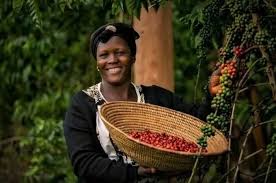
Coffee farming in Kigezi is primarily smallholder-based, with plots typically less than two hectares. Most farms practice mixed cropping, intercropping coffee with bananas, beans, maize, potatoes, and other food crops. Shade-grown coffee is common, either under indigenous trees or banana canopies, which helps maintain soil moisture, regulate temperature, and reduce disease incidence. Farmers often use traditional cultivation methods, supplemented by modern practices such as improved seedlings, pruning, mulching, and pest management promoted by cooperatives and government extension services.
The harvest season in Kigezi occurs from October to February, coinciding with the main rainy season, with selective hand-picking of ripe cherries to ensure bean quality. Processing is predominantly the washed (wet) method, where cherries are pulped, fermented, washed, and sun-dried, producing clean, high-quality Arabica beans. These beans are valued for their bright acidity, fruity and floral notes, and smooth body, making them highly sought after in the specialty coffee market.
Challenges in Kigezi include steep terrain that limits farm mechanization, soil erosion, pests and diseases (including coffee berry disease), and market fluctuations. Despite these constraints, coffee remains a vital source of income for smallholder farmers, supporting local livelihoods and contributing significantly to Uganda’s Arabica coffee exports. The region’s reputation for high-quality, specialty-grade beans makes Kigezi a cornerstone of Uganda’s coffee sector and a critical area for sustaining the country’s premium coffee production.