Shopping cart
Your cart empty!
Your cart empty!
Terms of use dolor sit amet consectetur, adipisicing elit. Recusandae provident ullam aperiam quo ad non corrupti sit vel quam repellat ipsa quod sed, repellendus adipisci, ducimus ea modi odio assumenda.
Lorem ipsum dolor sit amet consectetur adipisicing elit. Sequi, cum esse possimus officiis amet ea voluptatibus libero! Dolorum assumenda esse, deserunt ipsum ad iusto! Praesentium error nobis tenetur at, quis nostrum facere excepturi architecto totam.
Lorem ipsum dolor sit amet consectetur adipisicing elit. Inventore, soluta alias eaque modi ipsum sint iusto fugiat vero velit rerum.
Sequi, cum esse possimus officiis amet ea voluptatibus libero! Dolorum assumenda esse, deserunt ipsum ad iusto! Praesentium error nobis tenetur at, quis nostrum facere excepturi architecto totam.
Lorem ipsum dolor sit amet consectetur adipisicing elit. Inventore, soluta alias eaque modi ipsum sint iusto fugiat vero velit rerum.
Dolor sit amet consectetur adipisicing elit. Sequi, cum esse possimus officiis amet ea voluptatibus libero! Dolorum assumenda esse, deserunt ipsum ad iusto! Praesentium error nobis tenetur at, quis nostrum facere excepturi architecto totam.
Lorem ipsum dolor sit amet consectetur adipisicing elit. Inventore, soluta alias eaque modi ipsum sint iusto fugiat vero velit rerum.
Sit amet consectetur adipisicing elit. Sequi, cum esse possimus officiis amet ea voluptatibus libero! Dolorum assumenda esse, deserunt ipsum ad iusto! Praesentium error nobis tenetur at, quis nostrum facere excepturi architecto totam.
Lorem ipsum dolor sit amet consectetur adipisicing elit. Inventore, soluta alias eaque modi ipsum sint iusto fugiat vero velit rerum.
Do you agree to our terms? Sign up
Diriamba
Diriamba is the heart of the Carazo department in Nicaragua’s Pacific region. Historically significant as one of the country's oldest coffee-growing areas, it is distinct from the northern highlands for its lower elevations and unique volcanic "Pacific" terroir.
1. Geography & Terroir
Altitude: Much lower than the northern regions, with plantations typically situated between 600 and 900 meters (approx. 2,000–3,000 feet).
Climate: The region is characterized by a tropical savannah climate. It is warmer and drier than Jinotega or Matagalpa, which accelerates the ripening process of the cherries.
Soil: Extremely fertile volcanic soil from the Mombacho and Masaya volcanic range. The soil is deep and rich in organic matter, providing a strong nutrient base despite the lower altitude.
2. Production & Scale
Volume: Small compared to the "Big Three" northern regions. Carazo (including Diriamba) produces a minority of Nicaragua's Arabica, often estimated at less than 5% of national output.
Structure: Primarily composed of medium to large traditional estates (haciendas), many of which have been family-owned for generations since coffee was first introduced to the area in the late 1800s.
Urban Pressure: Like Costa Rica's Central Valley, Diriamba faces significant pressure from urban expansion, leading to the conversion of historic coffee lands into residential areas.

3. Varietal Profile
Primary Varietals: Historically dominated by Bourbon and Typica. Because this region was the earliest to develop, it still maintains some of the oldest heritage tree stock in the country.
Modern Adaptations: Due to lower altitudes being more susceptible to coffee leaf rust (roya), many farms have integrated more resistant varieties like Catimores and Sarchimors.
Robusta Potential: Diriamba is located in the Pacific lowlands where the government has occasionally promoted limited Robusta cultivation for the domestic soluble coffee market, though Arabica remains the prestigious crop.
4. Flavor & Processing
Flavor Profile: Distinctly different from high-mountain coffees; it is prized for its low acidity and heavy body.
Notes: Deep, earthy flavors with dominant notes of dark chocolate, brown sugar, and toasted nuts.
Acidity: Very mild and soft, often lacking the bright citrus "snap" of northern coffees.
Sweetness: Features a rustic, molasses-like sweetness.
Processing:
Washed: The standard method used by traditional estates to produce a consistent, clean, and balanced commercial-grade cup.
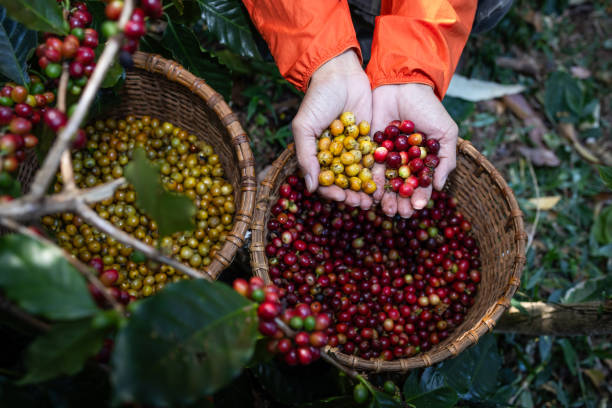
Sun-Drying: The drier Pacific climate is ideal for drying coffee on large open-air patios, which is a common sight during the peak harvest months of November through January.